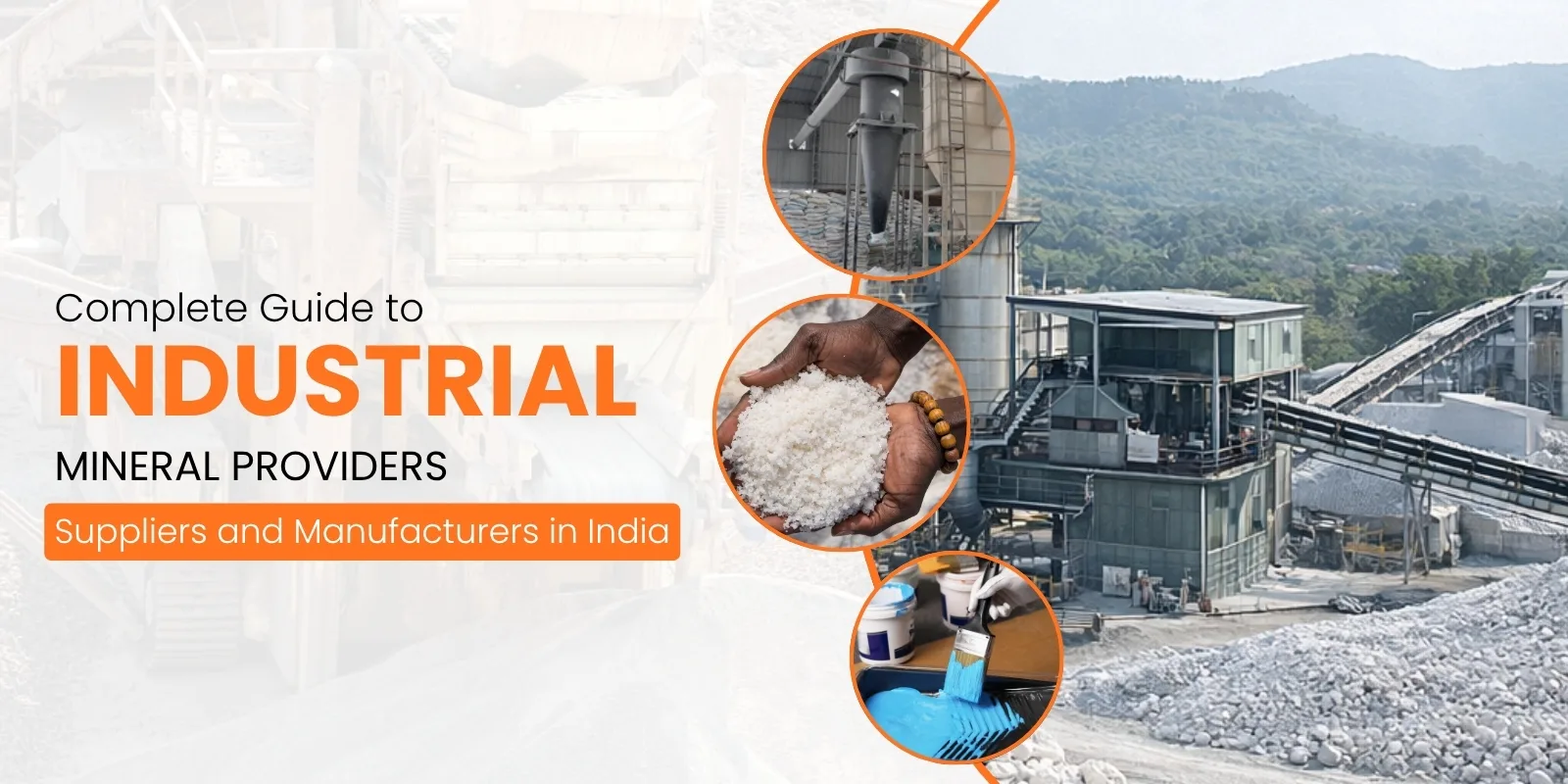
Complete Guide to Industrial Mineral Providers, Suppliers and Manufacturers in India
India is one of the most mineral-rich nations in the world, with vast natural resources that support a wide range of industries. From the iron ore belts of Odisha and Chhattisgarh to the limestone reserves of Rajasthan and the bauxite deposits of Jharkhand, the country holds an extraordinary diversity of natural resources beneath its soil. These mineral reserves form the backbone of major industries, such as steel, cement, chemicals, fertilisers, ceramics, glass, paints, and construction, making industrial minerals not just a commodity but a foundation of economic progress.
As India accelerates toward its vision of a $5 trillion economy, the demand for high-quality industrial minerals has surged. Mineral processing companies in India are no longer just raw material extractors; they have evolved into sophisticated industrial enterprises that offer value-added products, customised particle sizes, surface-treated minerals, and supply chain solutions tailored to modern manufacturing needs.
Whether you are sourcing talc for pharma applications, feldspar for ceramics, calcite for paint and rubber, or barite for oil well drilling, understanding India's industrial mineral supply ecosystem is critical. This comprehensive guide covers everything you need to know, from identifying the best industrial mineral suppliers to understanding market trends, choosing reliable mineral supply distributors, and exploring the leading mineral manufacturers in India. It also serves as a definitive reference for businesses tracking the top Mining Companies in India 2026 and beyond.
Understanding the Industrial Minerals Sector in India
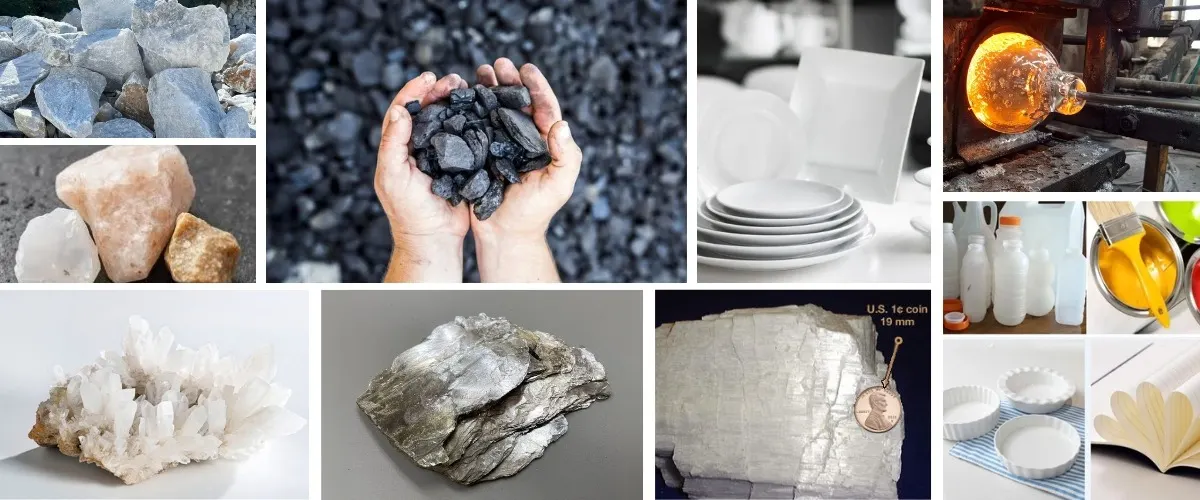
India's industrial minerals sector encompasses a wide range of non-metallic and metallic minerals, processed and supplied to manufacturing industries. Unlike precious or fuel minerals, industrial minerals derive their value from their physical and chemical properties rather than their metal content. These include minerals like talc, mica, feldspar, calcite, barite, bentonite, dolomite, silica, kaolin, fluorite, and wollastonite.
India is among the top global producers of several key industrial minerals. The country accounts for a significant share of world production in mica, barytes, talc, and vermiculite. States such as Rajasthan, Andhra Pradesh, Madhya Pradesh, Jharkhand, Karnataka, Gujarat, and Tamil Nadu are hubs of mineral production and processing activity.
The industrial minerals supply chain in India consists of three major layers: mineral production companies that operate mines and extract raw ore; mineral processing firms that beneficiate, grind, and purify the ore into finished products; and mineral supply distributors who handle logistics, warehousing, and delivery to end-users across domestic and international markets. Each layer plays a vital role in ensuring quality, consistency, and timely supply.
The sector has seen rapid modernisation over the past decade. Advanced grinding technologies, surface coating plants, ISO-certified quality labs, and digital supply chain tools have made Indian industrial mineral providers more competitive on the global stage. India now exports industrial minerals to over 100 countries, with major markets in Europe, Southeast Asia, the Middle East, and North America.
Key Types of Industrial Minerals and Their Applications
Before selecting industrial mineral providers, it helps to understand the major mineral categories and their industrial uses:
Talc: Used in paints, plastics, cosmetics, paper, ceramics, and pharmaceuticals. India is a top global talc producer, with major deposits in Rajasthan.
Calcite & Calcium Carbonate: These versatile minerals are essential across multiple industries, playing a key role in the production of rubber, PVC pipes, paper, paints, adhesives, and a wide range of construction materials. Available in various micron sizes for specific industrial applications.
Feldspar: Essential raw material for ceramics, glass, and sanitary ware. India exports large quantities of processed feldspar to global ceramic manufacturers.
Dolomite: Used in steelmaking, glass, ceramics, agriculture, and as a building material. Rich deposits are found across Rajasthan and Madhya Pradesh.
Kaolin (China Clay): Used in ceramics, paper coating, rubber, and paints. Processed kaolin commands premium pricing in export markets.
Silica & Quartz: These essential minerals are widely used in glass manufacturing, foundry applications, electronics, and the construction industry. India is rich in high-purity silica deposits, making it a key source for these materials.
Bentonite: Used in oil drilling, iron ore pelletising, civil engineering, and foundry sand bonding.
Mica: Used in electrical insulation, cosmetics, paints, and electronics. India has historically been one of the largest producers of mica globally.
Wollastonite: Used in ceramics, metallurgy, plastics, and paints as a functional filler and reinforcing agent.
Read More:- Kaolin Powder Safety, Storage & Handling Tips for Businesses
Key Factors to Consider When Choosing Industrial Mineral Providers
Finding the right industrial mineral provider is not simply about price. The quality of the mineral, the consistency of supply, technical support, and regulatory compliance all matter enormously — particularly for export-oriented or precision manufacturing industries.
Quality Certifications
The best industrial mineral suppliers in India hold ISO 9001 certifications, maintain in-house testing laboratories, and offer material safety data sheets (MSDS) with every shipment. Certifications for export, such as REACH compliance for European markets, further validate quality management systems.
Processing Capabilities
Leading mineral processing firms in India invest in micronising, classification, surface treatment, and blending capabilities. Particles ranging from coarse mesh sizes to ultra-fine micron grades require sophisticated grinding equipment. Providers with advanced Raymond mills, impact classifiers, or jet mills can offer a wider product range.
Supply Reliability
Industrial mineral supply services that come with dedicated logistics infrastructure, adequate warehouse capacity, and buffer stock management are far more reliable than smaller spot suppliers. Long-term contracts, EDI-based ordering systems, and on-time delivery performance metrics are hallmarks of mature distributors.
The best industrial mineral manufacturers maintain application development labs that help customers optimise mineral usage in their formulations. Whether it involves designing a specific particle size distribution for paint or testing brightness levels for paper, technical collaboration adds significant value beyond a transaction.
Mineral Processing Companies in India — How They Add Value
Raw mineral ore extracted from a mine is rarely suitable for direct industrial use. Mineral processing companies in India perform several critical transformation steps before the product reaches the end user. These stages typically include crushing, grinding, classification, beneficiation, flotation, calcination, surface treatment, and packaging. Beneficiation — removing impurities and improving purity — is particularly important for minerals used in pharmaceuticals, cosmetics, and high-end ceramics. A mineral that begins as a run-of-mine ore with 85% purity might be upgraded to 98% or even 99.9% purity through advanced processing, dramatically increasing its market value and application range
Surface coating is another key value-added service. Mineral production companies apply stearic acid, silane, or titanate coupling agents to the mineral surface, improving dispersion in polymers and enhancing compatibility with resins. Surface-treated minerals are critical for the plastics, rubber, and adhesive industries. India's mineral processing firms also offer custom micron grades — typically ranging from D97: 5 microns to 150 microns — allowing industrial users to select the precise particle size that optimises their production process. The ability to supply consistent, on-specification material across large volumes is what distinguishes professional mineral processors from informal suppliers.
Industrial Mineral Supply Services — Distribution and Logistics in India
Industrial mineral supply services in India have matured significantly over the past decade. Large mineral supply distributors operate pan-India networks, covering not just production states like Rajasthan, Andhra Pradesh, and Gujarat but also consumption hubs like Maharashtra, Tamil Nadu, West Bengal, and the National Capital Region.
Road, rail, and sea transport are all used for mineral distribution. Bulk mineral shipments to industries like cement, steel, and paper often move by covered rail wagons or dedicated bulk trucks. Smaller specialty mineral shipments — particularly for pharmaceutical, cosmetic, or export applications — are typically dispatched in 25 kg, 50 kg, or one-tonne jumbo bags, packed to moisture-proof standards.
For export-oriented mineral supply, proximity to major ports matters. Leading industrial distribution companies based near Mundra, Nhava Sheva, Chennai, and Visakhapatnam ports benefit from faster lead times and lower freight costs to global destinations. India's mineral exporters increasingly use digital freight platforms to optimise container booking and reduce logistics costs.
Market Trends Shaping India's Industrial Mineral Industry in 2026
The industrial mineral landscape in India is undergoing rapid transformation. Several macro and sector-specific trends are reshaping how mineral production companies, suppliers, and processors operate.
1. Critical Minerals Push
India launched the National Critical Mineral Mission in January 2025 with an outlay of approximately Rs. 16,300 crore. The mission targets minerals like lithium, cobalt, graphite, and rare earth elements that are vital for electric vehicles, solar panels, and defence electronics. This policy push has accelerated exploration and processing investments across the mineral sector.
2. Green and Sustainable Mining
Environmental compliance has moved from an obligation to a competitive advantage. Mining and mineral companies that adopt zero-liquid discharge, solar-powered grinding plants, and reclamation-first mine planning attract larger and more discerning customers. ESG-conscious buyers, both domestic and international, now ask for sustainability credentials before placing orders. This shift is clearly visible across the leading Mining Companies in India 2026, where green practices have become a non-negotiable part of business strategy.
3. Digitalisation of the Supply Chain
From online mineral trading portals to ERP-integrated procurement systems and real-time shipment tracking, the mineral supply chain is going digital. Leading industrial distribution companies are investing in customer portals that provide certificate of analysis downloads, live inventory visibility, and digital invoicing, reducing friction in the buyer-seller relationship.
4. Import Substitution and Atmanirbhar Bharat
Government policies encouraging domestic manufacturing have boosted demand for locally sourced industrial minerals. Industries that previously imported processed mineral products from China or Europe are actively switching to Indian suppliers, creating opportunities for mineral processing firms that can match international quality benchmarks.
5. Expansion of End-Use Industries
Rapid growth in construction, automotive, paints and coatings, flexible packaging, ceramics, and pharmaceuticals is driving sustained demand for industrial minerals. India's construction sector alone consumes millions of tonnes of limestone, dolomite, silica, and barite annually, a demand base that continues to expand with urbanisation.
Top Mining and Mineral Companies In India 2026
India's mining and mineral sector is home to a diverse mix of public sector giants, private conglomerates, and specialised processors. Below are some of the most prominent Mining Companies in India 2026, shaping the industry today.
1. HTMC Group
Founded in 1994 and based in Kolkata with primary processing operations at Dausa (Bapi), Rajasthan, HTMC Group has established itself as one of India's leading mineral processing and manufacturing companies, specialising in industrial minerals. The group is widely recognised as one of the largest minerals processors in India, offering a comprehensive portfolio of high-quality processed minerals, including talc, calcite, dolomite, feldspar, barite, and related products for export and domestic markets. HTMC Group's processing facilities are equipped with advanced grinding and classification technology, enabling the production of consistent, on-specification mineral powders across a wide range of micron sizes. The company caters to a wide range of industries, including paints, plastics, rubber, paper, pharmaceuticals, ceramics, and oil well drilling. Quality is a defining commitment. HTMC Group maintains strict in-house quality control systems, ensuring that every shipment meets customer specifications. The group's strong export capabilities, with products reaching clients across Asia, Europe, the Middle East, and beyond, have earned it a respected position among the best industrial mineral suppliers and leading industrial distribution companies operating from India today.
2. NMDC Limited
Established in 1958 and headquartered in Hyderabad, NMDC Limited is India's single largest iron ore producer and a Navratna Public Sector Enterprise under the Ministry of Steel. The company operates fully mechanised iron ore mines at Bailadila in Chhattisgarh and at Donimalai and Kumaraswamy in Karnataka, producing approximately 40 million tonnes of iron ore annually. NMDC is also the only organised diamond producer in India, operating the Majhgawan mine in Panna, Madhya Pradesh. Over the decades, the company has expanded its mineral portfolio to include exploration of copper, rock phosphate, limestone, dolomite, gypsum, bentonite, and graphite.
3. Coal India Limited (CIL)
Coal India Limited, headquartered in Kolkata, is the world's largest coal mining corporation by production volume and a Maharatna Public Sector Enterprise. Founded in 1975, CIL operates through eight wholly-owned subsidiaries spanning the coal-rich states of Jharkhand, Odisha, West Bengal, Madhya Pradesh, Chhattisgarh, Maharashtra, and Assam. The company produces a wide range of coal products, including coking coal, non-coking coal, semi-coking coal, washed coal, and coal fines, supplying the power, steel, cement, and fertiliser sectors. CIL operates a mix of open-cast and underground mines, with a combined production of over 700 million tonnes annually. The company plays a critical role in India's energy security, as coal remains the dominant fuel for power generation in the country.
4. Vedanta Limited
Vedanta Limited is one of India's largest diversified natural resources companies, with significant operations in zinc, lead, silver, iron ore, copper, aluminium, and power. A subsidiary of the global Vedanta Resources Group, the company's Indian operations span Rajasthan, Odisha, Goa, and several other states. In 2024, Vedanta reported revenues of approximately $15 billion, underscoring its massive scale in the Indian mineral sector. Hindustan Zinc, a Vedanta subsidiary, is the world's second-largest integrated zinc producer and third-largest silver producer, commanding around 75% of India's primary zinc market. Vedanta's aluminium business operates one of the world's largest single-location aluminium smelters at Jharsuguda, Odisha.
5. Tata Steel Limited
Tata Steel is India's leading steel producer and among the top Mining Companies in India 2026 globally. The company was India's highest revenue-generating mining firm in 2024, with revenues of approximately $28.1 billion. Tata Steel operates several captive iron ore and coal mines primarily in Jharkhand, Odisha, and Chhattisgarh, providing a secure supply of raw materials, iron ore, limestone, and coal for its integrated steel plants. The company's mining division has embraced automation, AI, and digital mine management to enhance efficiency and reduce operational risk. Tata Steel is also deeply committed to sustainable mining, implementing water recycling, emission reduction, and ecosystem restoration programmes at its mine sites.
6. Hindalco Industries Limited
Hindalco Industries, the flagship company of the Aditya Birla Group, is India’s leading aluminium producer and among the largest copper manufacturers globally. The company operates upstream bauxite and coal mines that directly support its integrated aluminium and copper value chains. With revenues approaching $27 billion in 2024, Hindalco is the second-largest mining and metals company in India by revenue. The company's bauxite mining operations span Odisha and other mineral-rich states, while its copper division, through its subsidiary Birla Copper, is a significant industrial mineral supplier to the electrical, electronics, and automotive sectors. Hindalco has adopted modern mining practices, including automated drilling, remote monitoring, and energy efficiency measures, significantly reducing its per-tonne carbon footprint.
7. Gujarat Mineral Development Corporation (GMDC)
Established in 1963 by the Government of Gujarat, GMDC is one of India's largest non-fuel mineral companies and a zero-debt public sector enterprise. The corporation is a major producer of lignite, bauxite, fluorspar, manganese, bentonite, silica sand, and ball clay minerals that serve industries ranging from power generation and aluminium smelting to glass-making, ceramics, water purification, and oil drilling. GMDC operates five lignite mines and one bauxite mine in Gujarat, and is now expanding into Odisha coal blocks with reserves estimated at 468 million tonnes. The company has also signed MoUs for exploring critical metals, positioning itself for the clean energy transition.
8. Hindustan Zinc Limited
Headquartered in Udaipur, Rajasthan, Hindustan Zinc Limited is the world's second-largest integrated zinc producer and the third-largest silver producer globally. A subsidiary of Vedanta, the company commands approximately 75% of India's primary zinc market and operates fully integrated zinc-lead-silver mines and smelters across Rajasthan and Uttarakhand. Hindustan Zinc holds the distinction of being the global lowest-cost zinc producer, a competitive advantage that provides resilience through commodity price cycles. The company's mines at Rampura Agucha, Sindesar Khurd, Rajpura Dariba, and Zawar are among the most productive zinc-lead mines in Asia.
9. MOIL Limited
MOIL Limited, a Miniratna PSU under the Ministry of Steel, is India's largest manganese ore producer, holding approximately 53% of the domestic market share. The company operates ten mines across Maharashtra and Madhya Pradesh and is the sole producer of Electrolytic Manganese Dioxide (EMD) in India, a specialty material used in dry-cell batteries and other electrical applications. Manganese ore is a critical input for steel manufacturing, where it serves as both a deoxidiser and an alloying agent. MOIL's production targets aim to reach 3.5 MTPA by 2030, supported by investments of approximately Rs. 2,400 crore in mine development and technology upgrades.
10. Hindustan Copper Limited (HCL)
Incorporated in 1967, Hindustan Copper Limited is India's only vertically integrated copper producer and the sole domestic company that mines copper ore. HCL operates mines and processing facilities across five states: Rajasthan, Madhya Pradesh, Jharkhand, Maharashtra, and Andhra Pradesh, with the Khetri Copper Complex in Rajasthan being its flagship operation. The company's integrated model covers the full value chain from ore mining and concentration to smelting and refining, producing copper cathodes and copper wire bars. Copper is among the most critical industrial minerals in the modern economy, with surging demand from the electric vehicle sector, power cables, electronics, and renewable energy infrastructure.
How to Choose the Right Industrial Mineral Supplier for Your Business
Selecting the right mineral supply partner is a strategic decision that affects product quality, production continuity, and profitability. Here is a practical framework for evaluating industrial mineral providers:
Define Your Specifications Precisely Before approaching any supplier, document your requirements — mineral type, purity grade, particle size distribution (PSD), moisture content, colour brightness, and any surface treatment needs. Vague enquiries lead to mismatched quotations.
Audit Processing Capabilities Visit the supplier's plant if possible, or request a virtual plant tour. Verify the type and capacity of grinding equipment, classification systems, and packaging lines. Understand whether the facility is ISO certified and when the last external audit occurred.
Request Samples and Run Internal Trials Never finalise a large-volume supply contract without trialling the material in your production process. A mineral that looks good on paper may behave differently in your specific formulation or process.
Evaluate Financial Stability A supplier who cannot fund raw material procurement or maintain buffer stock will cause supply disruptions. Request financial references or check the company's credit history, where available.
Assess Logistics and Lead Time Understand the supplier's dispatch location, typical transit times to your facility, and capacity for emergency orders. A mineral supply distributor with a wide logistics network reduces risk.
Check Export or Compliance Track Record For exporters, verify that the supplier has experience with export documentation, customs clearance, port-based dispatch, and compliance with destination-country regulations such as REACH, RoHS, or food-grade standards.
Conclusion
India's industrial mineral ecosystem is vast, dynamic, and increasingly sophisticated. From large public sector producers like NMDC, Coal India, and MOIL to diversified private players like Vedanta and Hindalco, and specialised processors who have built decades of expertise in specific mineral categories, the country offers one of the most complete industrial mineral supply chains in the world. Any business researching Mining Companies in India 2026 will find a landscape that is both deeply rooted in tradition and rapidly evolving with modern technology. For businesses seeking reliable mineral processing companies in India, the key is to look beyond price and focus on quality systems, processing depth, supply consistency, and technical competence. The best industrial mineral suppliers combine these qualities with a commitment to sustainable and responsible operations, a combination that creates long-term value for all stakeholders in the supply chain.
Whether you are a domestic manufacturer, an export trading house, or a multinational sourcing minerals from India, aligning with established and trustworthy mineral supply distributors and leading mineral manufacturers will ensure that your operations benefit from the very best that India's mineral wealth has to offer. HTMC Group stands as a prime example of what a modern industrial mineral provider looks like, combining mineral processing expertise, quality-driven operations, a diversified product portfolio, and strong export capabilities into a single, dependable supply partner. As India's mineral industry continues to grow and modernise, businesses that choose their mineral supply partners wisely will be the ones best positioned for long-term success.
Get in touch with us!
Get in touch with us!
×