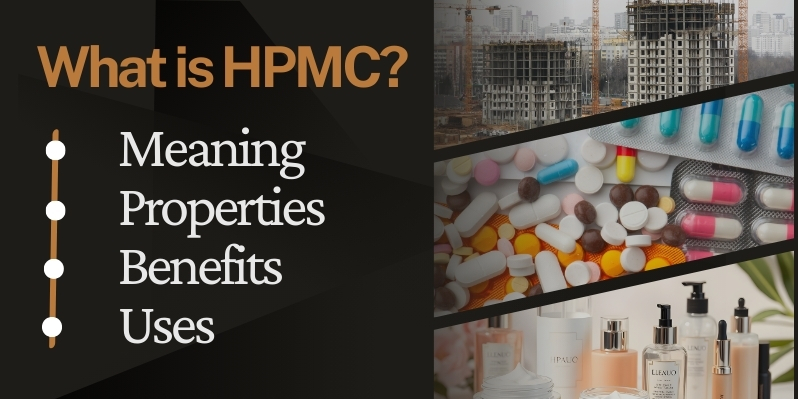
What Is HPMC? Meaning, Properties, Benefits and HPMC Uses
Hydroxypropyl Methylcellulose, widely abbreviated as HPMC, is one of the most versatile and in-demand industrial polymers today. Whether in medicines, cosmetics, construction chemicals, food processing, or daily-use products, HPMC plays a crucial functional role. Businesses often search for what HPMC is and how it enhances product performance. This detailed guide covers everything—from HPMC meaning to HPMC properties, hydroxypropyl methylcellulose benefits, and the most common HPMC uses across major industries.
What Is HPMC? – Complete Explanation
What Is HPMC? Hydroxypropyl Methylcellulose (HPMC) is a semi‑synthetic, non‑ionic cellulose ether derived from natural cellulose (wood pulp or cotton) by chemical modification. It appears as a white to off‑white powder or granules that dissolve in cold water to form a viscous, gel‑like solution.
Thanks to its thickening, water‑retention, emulsifying, film‑forming, and binding abilities, HPMC is widely used—from pharmaceuticals (binders, tablet coatings, controlled‑release formulations) to food (stabilizer, texture enhancer), cosmetics (creams, gels) and even construction (mortars, tile adhesives, plasters).
HPMC Meaning—Understanding the Term Scientifically
HPMC Meaning refers to Hydroxypropyl Methylcellulose—a semi‑synthetic, non‑ionic cellulose ether produced by chemically modifying natural cellulose so that some hydroxyl groups are substituted with methyl and hydroxypropyl groups. This modification endows HPMC with water solubility: in cold water it dissolves to form a clear, viscous solution. acts as a versatile polymer exhibiting thickening, water‑retention, film‑forming, binding, and emulsifying properties—making it widely useful in industries such as pharmaceuticals, food, cosmetics, and construction.
HPMC Properties—The Functional Characteristics
Understanding HPMC properties is essential for industries that rely on consistency and performance. These HPMC properties make it suitable for use in pharmaceuticals, building materials, adhesives, and personal care products.
Key HPMC Properties
Here are the most important HPMC properties manufacturers focus on:
- Water Solubility: One of the core HPMC properties is its ability to dissolve in cold water while maintaining viscosity.
- Excellent Film Formation: It forms flexible and transparent films, contributing to coating performance.
- Thermal Gelation: HPMC gels when heated and returns to liquid form when cooled, which is useful in food and construction applications.
- Stable Viscosity: It maintains thickness over time, even when exposed to varying pH levels.
- High Water Retention: This is one of the most valuable HPMC properties in construction materials like tile adhesives and plasters.
With these features, it’s clear why industries emphasize studying HPMC properties before choosing grades for specific applications.
Hydroxypropyl Methylcellulose Benefit—Why Industries Prefer HPMC
There are numerous hydroxypropyl methylcellulose benefits that make this polymer the first choice for manufacturers worldwide. These hydroxypropyl methylcellulose benefits improve product efficiency, stability, appearance, and usability.
- Improved Product Stability: One of the top hydroxypropyl methylcellulose benefits is preventing separation in liquids and emulsions.
- Enhances Texture & Viscosity: It helps products achieve uniform thickness and smoother texture.
- Effective Binder: In tablets and food items, one of the valuable hydroxypropyl methylcellulose benefits is its binding power.
- Excellent Moisture Retention: This helps prevent cracking in construction mortar and keeps cosmetics hydrated.
- Safe & Non-Toxic: Among all hydroxypropyl methylcellulose benefits, safety is a major advantage. It is approved globally for food and pharma use.
HPMC Uses – Applications Across Industries
There are hundreds of HPMC uses globally. Because of its versatility, HPMC is essential in pharmaceuticals, food manufacturing, construction, cosmetics, paints, and adhesives.
Let’s explore the most common HPMC uses:
1. Pharmaceutical Industry
One of the major HPMC uses is in tablet coating, capsule shells (vegetarian capsules), and as a binder. It enhances drug stability and dissolves properly in the digestive system.
2. Construction Industry
It improves water retention, workability, and adhesion in:
- Tile adhesives
- Wall putties
- Cement plasters
- Self-leveling compounds
The construction sector sees many functional HPMC uses because of its ability to improve strength and consistency.
3. Food Industry
Common HPMC uses include stabilizing bakery items, forming low-fat alternatives, and improving texture in dairy and desserts.
4. Cosmetics & Personal Care
In skincare and haircare, HPMC uses include thickening lotions, forming gels, stabilizing shampoos and protecting against moisture loss.
5. Paints, Adhesives & Detergents
HPMC increases viscosity, enhances spreadability, and improves shelf stability, making these industries highly dependent on HPMC uses.
Conclusion
Hydroxypropyl Methylcellulose is an essential multi-industry polymer that enhances stability, viscosity, and performance across countless products. Understanding What is HPMC? The full HPMC meaning, major HPMC properties, key hydroxypropyl methylcellulose benefits, and the wide range of HPMC uses help manufacturers choose the right grade for optimal results. As industries continue to grow, HPMC remains a vital ingredient for innovation and product improvement.
Frequently Asked Questions
1. What is HPMC used for the most?
HPMC is mainly used in pharmaceuticals, construction materials, cosmetics, and food as a thickener, binder, and stabilizer.
2. Is HPMC safe for consumption?
Yes, HPMC is approved globally as a safe, non-toxic, and non-allergenic ingredient in food and medicines.
3. What is the HPMC meaning in industry terms?
The HPMC meaning refers to Hydroxypropyl Methylcellulose, a modified cellulose polymer used for viscosity control and film formation.
4. What are the to phydroxypropyl methylcellulose benefits?
The benefits include excellent water retention, improved stability, safe consumption, viscosity enhancement, and strong binding properties.
5. Which industries rely most on HPMC uses?
Pharmaceuticals, construction, food processing, paints, detergents, and cosmetics rely heavily on HPMC use.
Get in touch with us!
×