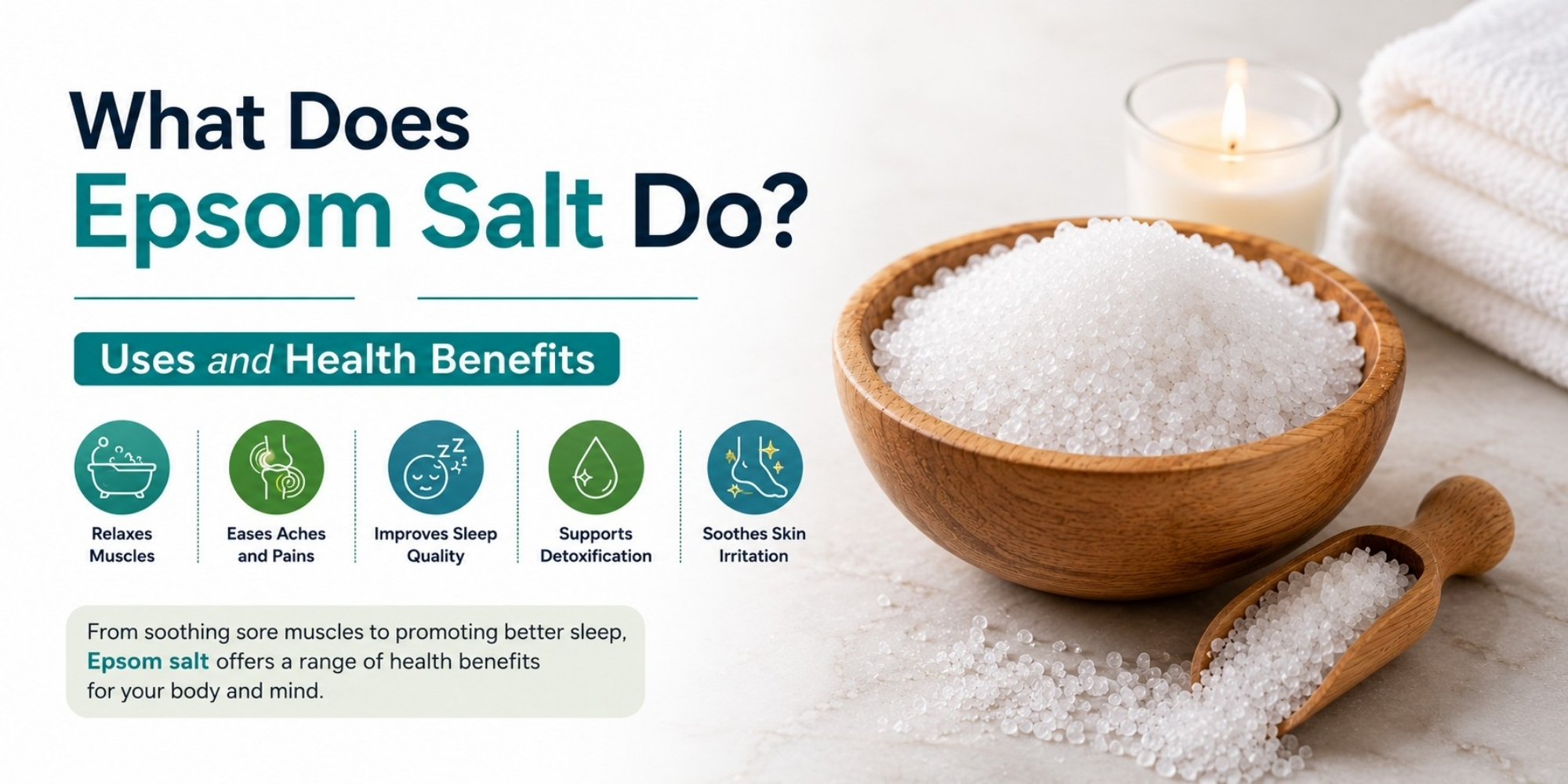
What Does Epsom Salt Do? Advantages, Uses and Health Benefits
You have probably seen Epsom salt on pharmacy shelves or heard someone mention it after a long workout. But beyond being a household name, most people are not fully aware of how useful this simple mineral compound actually is. From relieving sore muscles to supporting digestive health, Epsom salt has earned its place in medicine cabinets for centuries.
This guide breaks down everything you need to know, including what Epsom salt is, what does epsom salt do for your body, and how you can use it safely at home.
What Is Epsom Salt?
Epsom salt is not actually a salt in the traditional sense. It is a naturally occurring mineral compound of magnesium and sulfate, chemically known as magnesium sulfate. The name comes from Epsom, a town in Surrey, England, where it was first discovered in natural spring water around 400 years ago.
Unlike table salt, which is made of sodium chloride, Epsom salt has a distinctly bitter taste and is not used for cooking. It looks similar to coarse salt crystals but behaves very differently inside the body. When dissolved in water, it breaks apart into magnesium and sulfate ions, which many believe interact with the body in beneficial ways.
Magnesium is an essential mineral that plays a role in more than 300 enzymatic reactions in the human body. It supports muscle function, nerve transmission, energy production, and sleep regulation. Many people do not get adequate magnesium through diet alone, which is part of why Epsom salt has remained popular as a supplementary source.
How Does Epsom Salt Work?
How does epsom salt work depends largely on how it is being used. When dissolved in a warm bath, the magnesium and sulfate ions are believed to be absorbed through the skin, though scientific evidence on transdermal absorption is still limited. It is well established that warm water relaxes muscles and improves circulation, while Epsom salt is believed to enhance these effects.
When taken orally, the mechanism is much clearer. Magnesium sulfate acts as an osmotic agent, drawing water into the intestines. This softens stool, increases intestinal motility, and promotes a bowel movement, typically within 30 minutes to 6 hours.
Advantages of Epsom Salt
The advantages of epsom salt span across physical health, mental wellness, and even beauty routines. Here is a detailed look at what regular use can offer:
1. Muscle Pain and Recovery
One of the most popular reasons people reach for Epsom salt is to ease sore, tired muscles. Whether it is post-workout soreness, back tension, or general body aches, soaking in an Epsom salt bath is a widely practiced remedy. Magnesium plays a direct role in muscle contraction and relaxation, and replenishing it through a warm soak is believed to reduce stiffness and discomfort.
2. Stress Relief and Better Sleep
Stress drains the body of magnesium and raises adrenaline levels. When magnesium levels drop, sleep and mood both suffer. Soaking in an Epsom salt bath may help restore magnesium balance, which in turn supports the production of serotonin, a neurotransmitter linked to relaxation and positive mood. Many people report sleeping more soundly after an evening Epsom salt bath.
3. Reduced Inflammation and Swelling
There is some early evidence suggesting that Epsom salt soaks may help reduce inflammation and joint stiffness. People managing conditions like arthritis or fibromyalgia often use Epsom salt baths as a complementary therapy to help ease discomfort and improve day-to-day comfort. A 2025 clinical trial also found that Epsom salt foot baths helped delay nerve pain in chemotherapy patients.
4. Skin Care and Exfoliation
Epsom salt makes an excellent natural exfoliant. Its coarse texture helps remove dead skin cells when used as a scrub, leaving skin feeling smoother. It also has mild anti-inflammatory properties that can help calm irritated skin, reduce redness, and manage minor skin concerns. Many DIY beauty routines include it in face masks, foot scrubs, and bath blends.
5. Foot Soak Benefits
Soaking tired, achy feet in warm water with Epsom salt is one of the simplest and most effective uses. It helps reduce swelling, soften rough skin, ease foot pain, and even combat foot odor. Athletes and people who spend long hours standing often rely on this as part of their recovery routine.
6. Headache and Migraine Relief
Magnesium deficiency has been associated with a higher frequency of headaches and migraines. By relaxing the muscles surrounding the skull and improving circulation, an Epsom salt bath may help ease tension headaches and reduce migraine intensity for some individuals.
Epsom Salt for Constipation
Epsom salt for constipation is one of its most clinically supported uses. The US Food and Drug Administration has approved magnesium sulfate as an over-the-counter laxative for short-term constipation relief.
What epsom salt does when taken orally is quite straightforward. It works as an osmotic laxative, pulling water from surrounding tissues into the colon. This increase in water content softens hardened stool, makes it easier to pass, and stimulates intestinal contractions. Unlike stimulant laxatives that force the muscles to contract aggressively, Epsom salt works more gently, which reduces the risk of cramping.
For adults and children aged 12 and above, the standard approach is to dissolve 2 to 4 teaspoons of plain Epsom salt in 8 ounces of water and drink it immediately. Most people experience a bowel movement within 30 minutes to 6 hours. It is important to use only plain, food-grade Epsom salt for oral use and never scented varieties. If there is no response after two consecutive days, it is best to consult a doctor rather than continue self-treating.
Do not use Epsom salt orally in children under 6 years old, and always consult a healthcare provider before giving it to children aged 6 to 11.
Epsom Salt for What Else? Additional Uses
Gardening: Magnesium is a key nutrient for plant growth. Mixing Epsom salt into soil or using it as a foliar spray can help plants like tomatoes, roses, and peppers grow more vigorously.
Hair Care: Some people add it to shampoo or use it as a scalp scrub to remove buildup, add volume to hair, and reduce excess oil.
Splinter Removal: Soaking the affected area in warm Epsom salt water can help draw out splinters more easily by reducing inflammation around the skin.
Wound Care: Its mild antiseptic properties can help reduce infection risk in minor cuts and scrapes when used as a gentle soak.
Safety Tips and Precautions
Epsom salt is generally safe when used correctly, but a few precautions are worth keeping in mind:
Oral use should always follow recommended dosage guidelines. Overuse can lead to side effects like diarrhea, bloating, or in rare cases, magnesium toxicity.
People with kidney disease, heart conditions, or those on prescription medications should consult a doctor before using Epsom salt internally.
Pregnant women should seek medical advice before oral use.
Avoid using Epsom salt in hot tubs or jetted baths unless the manufacturer specifically confirms it is safe to do so.
Always choose plain, unscented Epsom salt for any internal use.
Frequently Asked Questions
Most people can safely enjoy an Epsom salt bath two to three times per week. There is no strict limit for external use in healthy individuals, but if you notice any skin irritation or dryness, reduce frequency and moisturize after soaking.
Many users report feeling calmer after an Epsom salt bath. This is thought to be connected to magnesium's role in regulating the nervous system and supporting serotonin production. While clinical evidence is still limited, the relaxing effect of a warm bath combined with Epsom salt is a widely recognized stress management practice.
Oral use of Epsom salt during pregnancy should only be done under direct medical supervision. Magnesium sulfate is sometimes administered in clinical settings during pregnancy for specific conditions, but self-medicating with it at home is not recommended without a doctor's guidance.
A standard Epsom salt bath typically uses 1 to 2 cups of Epsom salt dissolved in a full bathtub of warm water. Soak for at least 12 to 15 minutes to allow the minerals to work. For a foot soak, half a cup in a basin of warm water is sufficient.
Pure magnesium sulfate does not technically expire if stored properly. Keep it in a cool, dry place in a sealed container away from moisture. If it clumps together, it has likely absorbed moisture but is still usable. For oral use, however, always check the packaging for any manufacturer guidelines on shelf life.
Get in touch with us!
×