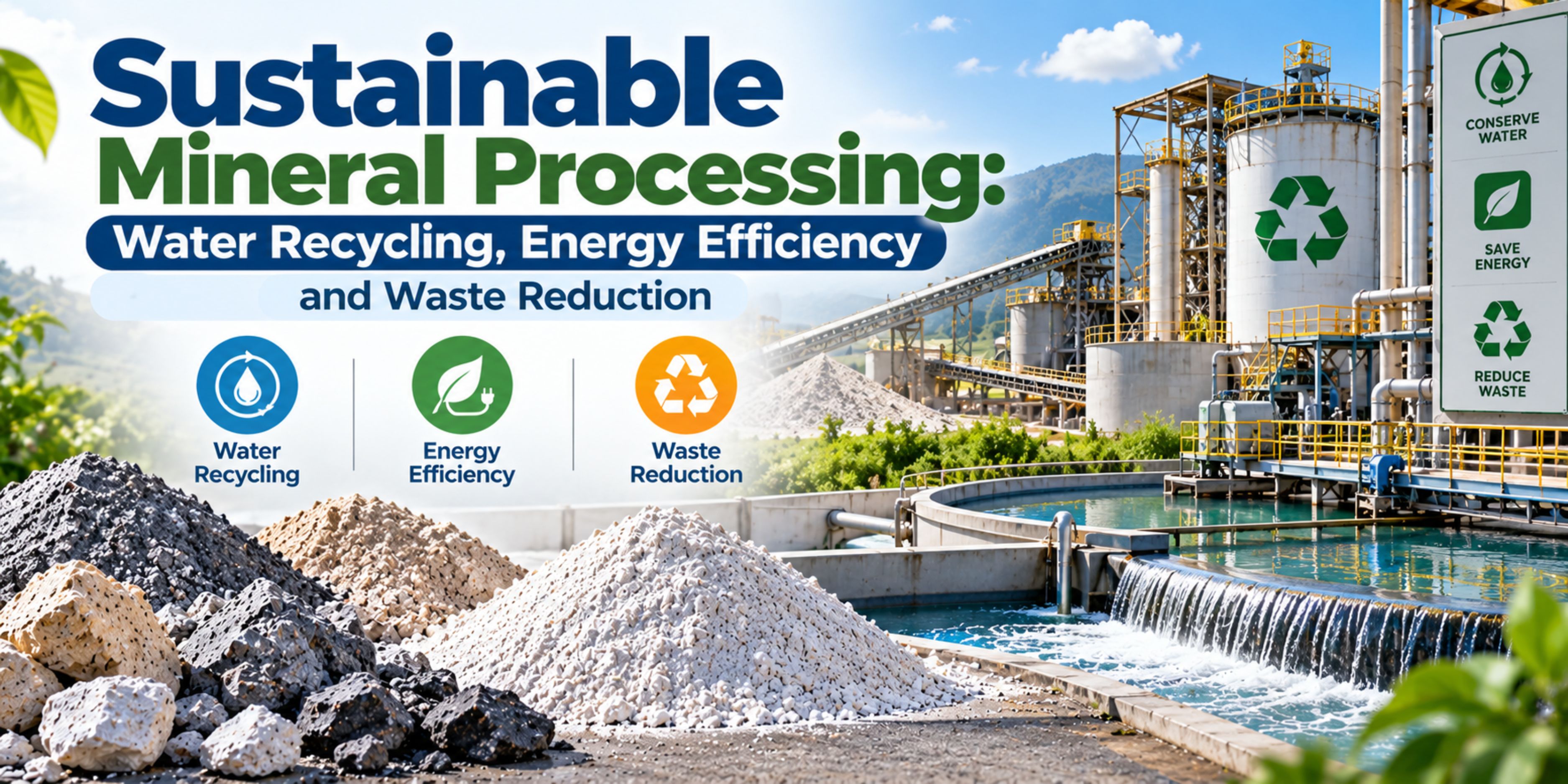
Sustainable Mineral Processing: Water, Energy and Waste Tips
Minerals go into almost everything we use. Paint, paper, plastics, ceramics, food, medicine, steel, farming and cosmetics all depend on them. But turning rock into a clean, fine, consistent product takes water, power and a lot of material handling. If this is done carelessly, it can waste resources, raise costs and harm the environment.
That is why more buyers and producers now talk about sustainable mineral processing. In this guide, HTMC Group explains in simple words what it means, how plants can recycle water, save energy and reduce waste, and what buyers should ask their suppliers.
What Is Sustainable Mineral Processing?
Mineral processing refers to all the processes that take place after rock mining. It includes crushing, grinding, washing, screening, drying, calcining, packing, and loading. Each stage consumes water, energy, or both, and can generate waste such as fine particles, dust, sludge or low-quality material.
Sustainable mineral processing means running these steps in a way that uses less water and energy, creates less waste, protects local land and people, and still delivers consistent product quality. It is not a trend only for large mines. It also makes good business sense, because water, power and waste disposal are real costs.
Why Sustainability Matters in Mineral Processing
There are three simple reasons.
- Cost. Every unit of water and power that is saved goes straight to the bottom line. Waste is also lost product that was already mined and processed.
- Customer demand. Large buyers in food, personal care, paper, paints and plastics now ask suppliers about environmental practices. A sustainable supplier is easier to approve.
- Regulation and community trust. Water rules, dust limits and land restoration expectations are getting stricter. Plants that plan early face fewer shutdowns and disputes.
Water Recycling in Mineral Processing
Water is used in washing, wet grinding, slurry transport, flotation, filtration and dust control. In many plants, the same water can be used again and again if it is handled well.
- Closed loop circuits. In a closed loop, water used in the process is collected, cleaned and sent back for reuse. Industry sources report that closed-loop recycling can cut fresh water intake by a large share, with figures such as up to 40 percent often quoted. The real number depends on the plant and the mineral.
- Thickening and filtration. Thickeners settle solids from water so that clear water can return to the process. Filter presses then squeeze more water out of the solid cake. Less water in the waste means more water recovered.
- Settling ponds and sumps. Even simple settling ponds help a lot. They let fine solids sink so that water can be pumped back.
- Rainwater harvesting. Collecting rain from roofs and yards reduces the need for groundwater. It is simple, low-cost, and works well in many regions.
- Dry processing where possible. Some minerals can be ground and classified without water, using air classifiers and dry mills. Reports suggest that shifting to dry methods can cut water use meaningfully. Dry processing is not suitable for every mineral or every fineness target, so each plant must test its own case.
- Water quality monitoring. Recycled water can build up salts, fine solids or chemicals. Regular checks of pH, solids and conductivity help keep product quality stable.
Energy Efficiency in Mineral Processing
Grinding and drying are the biggest energy users in most plants. Research on comminution (size reduction) shows that only a very small part of the energy fed to a mill is actually used to break particles, and the rest is lost as heat, noise and friction. That means there is a lot of room to improve.
- Right-sized equipment. An oversized motor or mill running at low load wastes power. Match equipment to real throughput.
- Better crushing before grinding. Crushing is far more energy efficient than fine grinding. A well-controlled crushing stage reduces the load on mills.
- Classifiers and closed-circuit grinding. If fine particles are removed early, the mill does not grind them again. This saves energy and improves product consistency.
- Variable speed drives. Fans, pumps and conveyors often run at full speed even when not needed. Variable speed drives match power to demand.
- Heat recovery. Kilns and dryers release hot exhaust. This heat can be used to pre-dry feed material or heat other parts of the plant. Heat integration is a well-known way to cut fuel use.
- Moisture control. Wet feed takes more energy to dry. Covering stockpiles and controlling moisture early reduces drying cost.
- Renewable power. Solar panels on roofs and open land can supply a good part of daily plant power. Many plants now use solar to reduce fossil fuel dependence and carbon footprint.
- Energy monitoring. What you do not measure, you cannot improve. Submeters on key equipment show where power is going and help to catch faults early.
Waste Reduction in Mineral Processing
Waste in mineral plants usually comes in four forms: rejected rock, fines and dust, sludge, and packaging or off-spec material. The goal is to reduce it at the source and then find a use for what remains.
- Better ore selection. Sorting and selective mining remove waste rock before it enters the plant. This saves water, energy and grinding cost, because only useful material is processed.
- Process control. Stable feed, correct screen sizes and good sampling reduce off-spec batches. Fewer rejected batches means less waste.
- Fine recovery. Fine particles caught in bag filters or cyclones are often valuable. With proper grading, they can be sold as a separate product or blended back in.
- Dust control. Bag filters, enclosed conveyors and covered storage keep dust inside the process. This protects workers, neighbours and product yield.
- Dry stacking and better tailings handling. Reducing water in waste makes it easier and safer to store, and recovers more water for reuse. Studies note that lower water content in waste also reduces risks linked to storage dams.
- Circular thinking. Waste from one process can be raw material for another. Many solid wastes find use in construction fillers, road base, soil improvement and cement. A circular approach turns a cost into a possible income.
- Smart packaging. Right-sized bags, reusable jumbo bags and good pallet wrapping cut packing waste and product damage.
Responsible Mining Is the First Step
Sustainability starts at the mine, not only at the plant. Good practice includes planned extraction, protection of nearby water sources, plantation and land restoration, safe working conditions and community support. When mining is well managed, the quality of raw material is steadier and the whole supply chain becomes more reliable.
Logistics and Carbon Footprint
Transport is a big part of a mineral's footprint. A few smart choices help:
- Moving bulk cargo by rail instead of road where possible
- Using coastal sea routes for long distances
- Planning full loads to avoid empty trips
- Keeping warehouses near key customers to reduce travel
- Supplying bulk in bulkers and silo trucks to reduce packaging
These steps cut both cost and emissions.
A Simple Sustainability Checklist for Plants
Here is a quick list that any plant manager can use as a starting point.
- Measure fresh water use per ton of product.
- Measure power use per ton of product.
- Find the top three energy users and the top three water users.
- Fix leaks, idle running and overflows first, because they cost little.
- Add water recycling and settling where there is none.
- Recover fines and dust wherever they can be sold or reused.
- Add solar or other renewable power in phases.
- Track waste by type and set yearly reduction targets.
- Train staff, because daily habits matter as much as equipment.
- Review results every quarter and share them with customers.
What Buyers Should Ask Suppliers
If you buy minerals in bulk, a few simple questions help you check sustainability:
- Does the supplier own or lease its mines, and are they managed responsibly?
- What certifications does the plant hold?
- Does the plant use renewable energy, water recycling or rainwater harvesting?
- How does the supplier manage dust and waste?
- Can the supplier supply in bulk to cut packing waste?
- Can the supplier provide TDS, COA and safety documents on request?
A supplier that answers these clearly is usually well run in other areas too.
How HTMC Group Supports Sustainable Mineral Processing
HTMC Group (HiTech Minerals and Chemicals Group) is an Indian industrial minerals manufacturer and supplier with over 40 years of experience and customers in more than 30 countries. The group states a focus on responsible mining and cares about its footprint in several ways:
- Solar power. A 180 kWp solar installation with 602 modules, with an average daily generation of around 810 units, as listed on the HTMC website.
- Rainwater harvesting. A 135 KL water tank to support rainwater use and reduce water consumption.
- LED lighting. Lighting load converted from 9 kWh to 0.5 kWh through LED lights.
- Plantation at mining sites. Regular plantation to reduce soil degradation and conserve land.
- Logistics planning. Use of rail, coastal sea and other efficient modes, including full rake movement to optimise cost and delivery time.
- Certified facilities. Processing units with international certifications and in-house labs for quality checks.
Final Thoughts
Sustainability is not a single big project. It is a series of small, practical steps: measure, fix, recycle, recover and improve. Plants that treat sustainable mineral processing as a daily habit save money, win trust and are better prepared for the future. Buyers who ask the right questions help the whole industry move in the same direction.
HTMC Group is ready to support your needs with quality minerals, responsible practices and clear documents. Request a sample + TDS/COA for this application and start a conversation today.
Get in Touch with HTMC Group
- Call Us: +91 33 2226 8228, +91 98 1140 9161
- Enquire Now: [email protected]
Frequently Asked Questions (FAQs)
It means processing minerals in a way that saves water and energy, reduces waste and protects the environment, while keeping product quality and cost under control.
They can use closed-loop circuits, thickeners, filter presses, settling ponds and rainwater harvesting to collect, clean, and reuse process water.
In most plants, fine grinding and drying use the most energy. Better crushing, classifiers, heat recovery and right-sized motors can reduce this.
Not always. Dry methods save water but may not suit every mineral or fineness requirement. Each plant should test and compare.
Remove waste rock early, improve process control, recover fines and dust, manage tailings well and find reuse routes for solid waste.
Some steps need investment, but many pay back through lower water, power and waste costs. Simple actions like fixing leaks cost very little.
It can supply a good share of daytime power, depending on plant size and sunlight. Many plants use solar to reduce fossil fuel use.
Planned, well-managed mining gives steadier raw material, which means more consistent quality after processing.
Ask about mine management, certifications, energy and water practices, dust and waste control, and availability of TDS, COA and safety documents.
Contact HTMC Group through htmcgroup.com or the phone numbers above. Share your application and requirements, and request a sample with TDS and COA.
Contact Us

×