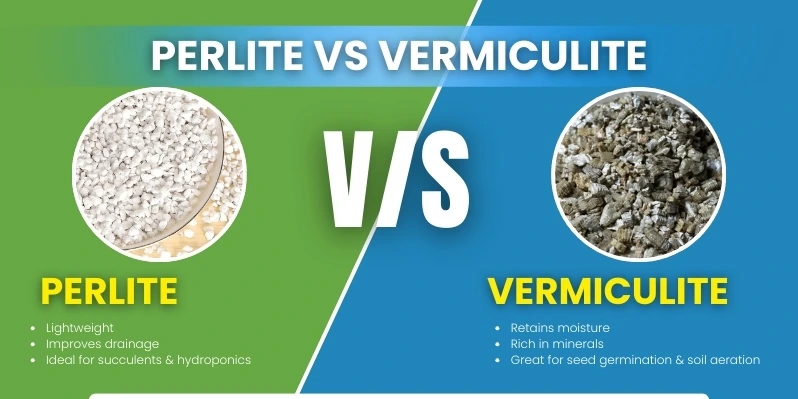
Perlite vs. Vermiculite: What’s the Difference and Which Is Better?
When it comes to improving soil quality and boosting plant growth, gardeners often debate perlite vs. vermiculite. Both are popular soil amendments used in gardening, horticulture, and commercial agriculture. Although they may look similar at first glance, they serve different purposes and offer unique benefits.
If you’re wondering which one is better for your plants, this detailed guide will explain everything you need to know about perlite vs. vermiculite, including their properties, uses, advantages, and ideal applications.
What Is Perlite?
Perlite is a naturally occurring volcanic glass that expands when exposed to high heat. The heating process causes the material to puff up, creating lightweight, white, porous granules.
Key Characteristics of Perlite:
- Excellent moisture retention
- Holds nutrients effectively
- Neutral pH
- Lightweight
- Sterile and safe for plants
Unlike perlite, vermiculite absorbs and retains water, making it ideal for plants that require consistent moisture levels.
Perlite vs. Vermiculite: Key Differences
Understanding the main differences between perlite vs. vermiculite can help you choose the right soil amendment for your gardening needs.
Key Characteristics of Vermiculite:
1. Water Retention
- Perlite: Drains quickly and does not hold much water.
- Vermiculite: Retains water and releases it slowly to plant roots.
If you’re growing succulents or cacti, perlite is a better option. For moisture-loving plants, vermiculite is more suitable.
2. Aeration
- Perlite: Provides superior aeration by creating air pockets in soil.
- Vermiculite: Offers moderate aeration but focuses more on moisture retention.
Plants with delicate roots benefit from perlite’s airy structure.
3. Nutrient Retention
- Perlite: Does not retain nutrients effectively.
- Vermiculite: Holds nutrients like potassium, magnesium, and calcium.
For seed starting and vegetable gardening, vermiculite can help maintain essential nutrients.
4. Texture and Appearance
- Perlite: White, lightweight, and porous.
- Vermiculite: Brownish-gold flakes with a softer texture.
Their visual difference also makes it easier to identify them in potting mixes.
When to Use Perlite
Perlite is best used in situations where drainage is critical. It prevents waterlogging and reduces the risk of root rot.
Ideal Uses:
- Succulents and cacti
- Indoor plants are prone to overwatering
- Hydroponic systems
- Propagation mixes
- Improving heavy clay soils
If your soil tends to stay wet for too long, adding perlite will significantly improve its structure.
When to Use Vermiculite
Vermiculite is ideal when consistent moisture is required. It helps maintain soil hydration and supports strong seed germination.
Ideal Uses:
- Seed starting
- Vegetable gardens
- Flower beds
- Moisture-loving plants
- Mulching
It is especially beneficial in dry climates where soil moisture evaporates quickly.
Can You Mix Perlite and Vermiculite?
Yes, many gardeners combine both to balance drainage and moisture retention. Using perlite and vermiculite together creates a well-structured soil mix that supports healthy root development.
A common mixture includes:
- 1 part garden soil
- 1 part compost
- 1 part perlite or vermiculite (or a combination of both)
This blend ensures proper aeration while maintaining adequate moisture levels.
Advantages of Perlite
- Prevents soil compaction
- Improves drainage
- Lightweight and easy to handle
- Long-lasting and does not decompose
- Reduces the risk of fungal diseases
Perlite is especially useful for container gardening and indoor plants.
Advantages of Vermiculite
- Excellent moisture control
- Enhances seed germination
- Improves nutrient retention
- Ideal for tropical and moisture-loving plants
- Helps reduce watering frequency
Vermiculite is a preferred choice for gardeners who need consistent soil hydration.
Disadvantages to Consider
Perlite Cons:
- Can float to the top after watering
- Produces dust during handling
- Does not provide nutrients
Vermiculite Cons:
- May retain too much moisture for some plants
- Slightly heavier than perlite
- Can encourage overwatering if not used properly
Understanding these limitations will help you avoid common gardening mistakes.
Perlite vs. Vermiculite: Which Is Better?
There is no universal winner in the perlite vs. vermiculite comparison. The better option depends entirely on your plants and growing conditions.
Choose Perlite If:
- You need better drainage.
- Your soil is compacted.
- You grow succulents or cacti.
- You want improved aeration
Choose Vermiculite If:
- Your plants need consistent moisture.
- You are starting seeds.
- You grow vegetables.
- You live in a dry climate.
In many cases, combining both materials provides the best results.
Environmental and Safety Considerations
Both perlite and vermiculite are naturally occurring minerals and are generally safe for gardening use. They are sterile and free from harmful pathogens.
However, it is advisable to:
- Wear a mask while handling to avoid inhaling dust.
- Store in a dry place
- Avoid excessive application
When used correctly, both materials are environmentally friendly and sustainable soil amendments.
Cost Comparison
In most markets, perlite is slightly more affordable than vermiculite. However, prices vary depending on location, quality, and packaging size.
Since both are long-lasting and do not decompose quickly, they offer good value for money in gardening applications.
Conclusion
The debate over perlite vs. vermiculite ultimately comes down to understanding your plant’s needs. Perlite improves drainage and aeration, while vermiculite enhances moisture and nutrient retention. If you are growing succulents or plants sensitive to overwatering, perlite is your best choice. For seed germination and moisture-loving plants, vermiculite delivers better results. Many experienced gardeners use a combination of both to create balanced soil mixes.
By choosing the right amendment, you can promote stronger roots, healthier plants, and improved overall growth. Understanding the differences between perlite vs. vermiculite will help you make an informed decision and achieve better gardening success.
×