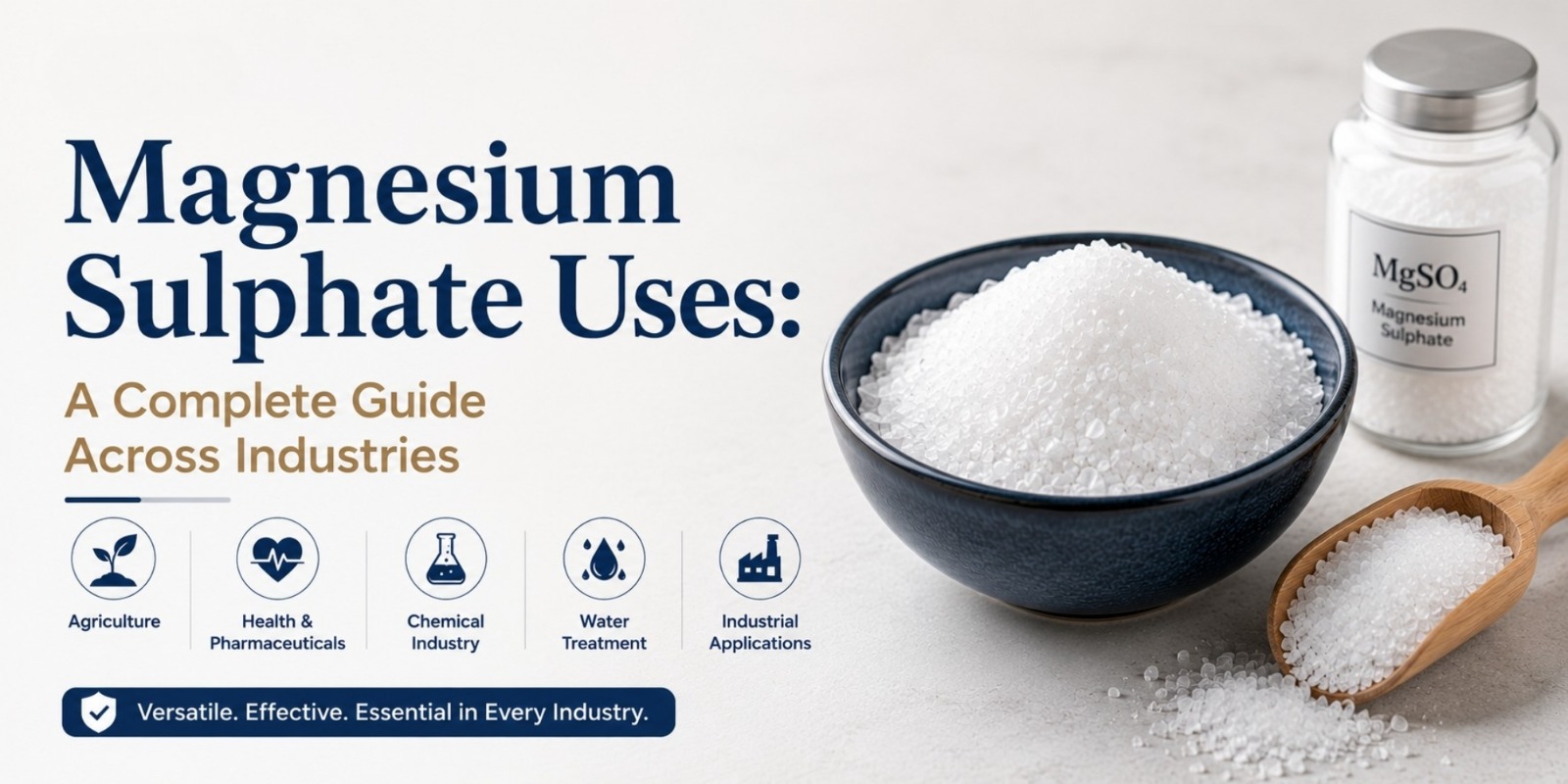
Magnesium Sulphate Uses: A Complete Guide Across Industries
Most people have come across magnesium sulphate at some point, even if they did not recognise it by name. If you have ever soaked tired muscles in an Epsom salt bath, added a fertiliser to your garden soil, or taken a laxative for digestive discomfort, you have likely encountered this compound in action. But the full picture of magnesium sulphate uses goes far beyond these familiar examples.
Magnesium sulphate, with the chemical formula MgSO4, is an inorganic salt composed of magnesium, sulphur, and oxygen. It is found naturally in minerals like kieserite and epsomite and can also be produced synthetically. In its most common form, magnesium sulphate heptahydrate (MgSO4.7H2O), it appears as white, odourless crystals that dissolve quickly and completely in water. This high solubility, combined with its non-toxic profile and cost-effectiveness, is what makes it so valuable across such a wide range of industries.
The global magnesium sulphate market was valued at over USD 1 billion in 2025 and is projected to grow steadily through the next decade, driven by rising demand from agriculture, pharmaceuticals, personal care, and industrial manufacturing. In this blog, we take a deep look at the most important magnesium sulphate uses across key sectors so you can understand why this compound continues to be one of the most relied-upon industrial and nutritional chemicals in the world.
What Makes Magnesium Sulphate So Useful?
Before diving into specific applications, it helps to understand what properties make magnesium sulphate so useful across different industries.
The compound is highly water soluble, dissolving at approximately 71 grams per 100 ml of water at room temperature. This makes it easy to formulate into liquids, sprays, injections, and process solutions without requiring special equipment or conditions. Its bioavailability is also excellent, meaning the magnesium it contains is readily absorbed by both plants and the human body, making it effective even at relatively low doses.
Magnesium sulphate is chemically stable under normal conditions and is non-reactive with most common substances. It is non-toxic, biodegradable, and considered environmentally safe, which is an important advantage in industries that are increasingly focused on sustainability and regulatory compliance. It is available in multiple grades including agricultural grade, food grade, and pharmaceutical grade, each meeting specific purity and quality standards for its intended use.
Magnesium Sulphate Uses Across Key Industries
Magnesium sulphate is genuinely one of the most versatile industrial and nutritional compounds available. Below are the most significant sectors that rely on it, each drawing on a different set of its properties.
Magnesium Sulphate Uses in Agriculture
The single largest application of magnesium sulphate uses globally is in agriculture, where it serves as a critical source of two essential plant nutrients: magnesium and sulphur.
Magnesium is a core component of chlorophyll, the pigment that plants use to capture sunlight and carry out photosynthesis. Without sufficient magnesium, plants cannot produce chlorophyll in adequate amounts, which leads to interveinal chlorosis, a condition where the leaf turns yellow while the veins remain green. This is one of the most common nutrient deficiency problems in modern intensive farming, particularly in sandy soils and acidic soils that lose magnesium quickly through leaching.
Sulphur is equally important for plant growth. It is needed for the synthesis of amino acids, proteins, and vitamins, and plays a key role in enzyme activity and root development. Many soils, especially those that have been farmed intensively for years, are deficient in both magnesium and sulphur.
Magnesium sulphate addresses both deficiencies simultaneously with a single application. It dissolves quickly in water, which means the nutrients become available to plants fast, making it effective both as a soil-applied fertiliser and as a foliar spray. Foliar application is particularly useful when plants are already showing signs of magnesium deficiency, as the leaves absorb the nutrient directly, and visible improvement can appear within a few days of treatment.
Crops that respond particularly well to magnesium sulphate applications include tomatoes, potatoes, peppers, citrus fruits, roses, wheat, rice, and cotton. It is also widely used in drip irrigation systems because it does not clog emitters and mixes well with other fertiliser inputs.
Beyond direct crop nutrition, magnesium sulphate also helps improve root development, enhances the efficiency of nitrogen and phosphorus uptake, and helps buffer moderately acidic soils to create a more plant-friendly environment. These combined effects explain why it is one of the most widely applied secondary nutrient fertilisers in the world.
2. Magnesium Sulphate Uses in Pharmaceuticals and Healthcare
Pharmaceutical and healthcare applications represent some of the most critical magnesium sulphate uses from a human health perspective.
In clinical medicine, injectable magnesium sulphate is used as a first-line treatment for eclampsia and pre-eclampsia, two serious and potentially life-threatening conditions that can occur during pregnancy. These conditions are characterised by dangerously high blood pressure and, in the case of eclampsia, seizures. Intravenous magnesium sulphate is highly effective at preventing and controlling these seizures, and it remains the treatment of choice in hospitals and maternity units worldwide.
Magnesium sulphate is also used intravenously as a bronchodilator in severe asthma attacks when standard treatments have not been effective. The magnesium ion relaxes smooth muscle tissue in the airways, which helps open them up and improves breathing in acute exacerbations.
In oral form, magnesium sulphate acts as a saline laxative. It draws water into the intestines through osmosis, which softens stool and stimulates bowel movements. This makes it useful for relieving occasional constipation and is also used in bowel preparation before medical procedures or surgery.
Magnesium sulphate is also used as an electrolyte supplement for patients who have low magnesium levels due to illness, poor diet, or as a side effect of certain medications. Since magnesium is involved in over 300 enzymatic reactions in the body, including those controlling muscle contraction, nerve transmission, heart rhythm, and blood sugar regulation, maintaining adequate levels is important for overall health.
In pharmaceutical manufacturing, magnesium sulphate is used as an excipient in the formulation of tablets, capsules, and injectable solutions. It meets strict international quality standards including USP (United States Pharmacopeia), BP (British Pharmacopoeia), and IP (Indian Pharmacopoeia), which means it can be reliably used in regulated drug manufacturing environments.
3. Magnesium Sulphate Uses in Food and Beverage
In the food and beverage industry, magnesium sulphate is approved as a safe food additive and is used in several important ways.
It is used as a firming agent in the processing of canned vegetables, particularly products like canned tomatoes and beans, where maintaining texture after heat processing is important for product quality. Magnesium sulphate strengthens the cell walls of the vegetable tissue, helping the product retain its firmness even after sterilisation at high temperatures.
It is also used as a food-grade drying agent and in the preparation of certain food-grade chemical reactions. In tofu production, magnesium sulphate is used as a coagulant to set soy protein into a solid mass. This application is particularly common in parts of East Asia where it has been used in traditional food production for centuries.
As a nutritional fortification ingredient, magnesium sulphate can be added to functional foods and dietary supplements to boost their magnesium content. Consumer awareness of magnesium deficiency has grown significantly in recent years, and this is driving demand for magnesium-fortified food and supplement products globally.
4. Magnesium Sulphate Uses in the Textile Industry
The textile industry is another important sector that relies on magnesium sulphate across several stages of fabric production and finishing.
In dyeing operations, magnesium sulphate acts as a mordant, which is a substance that helps fix dye molecules permanently onto fabric fibres. Without a mordant, many dyes would wash out quickly or fade unevenly after application. Magnesium sulphate helps create a stable bond between the dye and the fibre, resulting in better colour fastness and more consistent dyeing results across large batches of fabric.
It is also used to control pH levels during scouring and bleaching processes, where raw fabrics are cleaned and whitened before dyeing. Maintaining the correct pH during these processes is critical for fabric quality and prevents damage to the fibres. Magnesium sulphate provides a mild, buffering effect that helps keep the process conditions stable.
Additionally, in fabric weighting and finishing, particularly in the processing of silk and certain synthetic fabrics, magnesium sulphate is used to add body and weight to the material, improving its drape and feel for the end consumer.
5. Magnesium Sulphate Uses in Water Treatment
Water treatment is a growing application area for magnesium sulphate uses, particularly in industrial water management and municipal water processing.
Magnesium sulphate is used to adjust the mineral composition of treated water, particularly in systems where low magnesium levels could cause corrosion problems in pipes and equipment. Adequate magnesium content in treated water helps create a protective mineral layer on pipe surfaces, which reduces corrosion and extends the life of water distribution infrastructure.
It is also used in certain industrial water treatment processes to prevent the formation of calcium carbonate scale in boilers, heat exchangers, and cooling towers. The sulphate ions interact with dissolved calcium to form calcium sulphate, which is less prone to scale formation under certain operating conditions, helping to maintain equipment efficiency and reduce maintenance costs.
In aquaculture and aquarium management, magnesium sulphate is used to maintain the correct mineral balance in water systems that support fish and marine life. Magnesium is a critical component of seawater chemistry, and maintaining appropriate levels is important for the health of marine organisms.
6. Magnesium Sulphate Uses in Chemical Manufacturing
Magnesium sulphate serves as a starting material and intermediate in the production of various magnesium-based chemical compounds. These include magnesium hydroxide, which is widely used as a flame retardant, antacid, and wastewater neutralisation agent; magnesium carbonate, used in pharmaceuticals, cosmetics, and as a fire suppressant; and magnesium oxide, which has applications in refractory materials, animal feed, and environmental remediation.
In chemical laboratories and pharmaceutical manufacturing facilities, anhydrous magnesium sulphate (the form with no water of crystallisation) is one of the most commonly used drying agents. It is highly effective at removing trace moisture from organic solvents and reaction mixtures, and it is preferred because it does not react with most organic compounds and is easy to remove by filtration.
7. Magnesium Sulphate Uses in Personal Care and Wellness
The consumer wellness and personal care market represents a rapidly growing segment of magnesium sulphate uses. The North American market for magnesium-based personal care products saw a significant jump in demand in early 2025, driven by growing awareness of magnesium's role in sleep quality, muscle recovery, and skin health.
Epsom salt, which is pharmaceutical- or cosmetic-grade magnesium sulphate heptahydrate, is widely used in bath soaks and body scrubs. When dissolved in a warm bath, the magnesium is believed to be absorbed through the skin, providing relief from muscle soreness, reducing inflammation in joints, and promoting relaxation. Athletes and fitness enthusiasts commonly use Epsom salt baths after intense training sessions as part of their recovery routine.
In skincare formulations, magnesium sulphate is used as a texture modifier and skin conditioning agent. It improves the feel of creams, lotions, and serums and is used in some formulations designed for sensitive or irritated skin due to its mild and non-reactive nature.
Why Quality and Grade Selection Matter
Not all magnesium sulphate is the same. The grade selected must match the intended application. Agricultural grade is suitable for soil and foliar applications but is not processed to the purity levels required for food or pharmaceutical use. Food grade meets the specifications of food safety authorities and is safe for direct contact with food and for human consumption.
Using the wrong grade for the wrong application can result in product quality issues, regulatory violations, and in the case of pharmaceutical or food applications, potential safety risks. Sourcing from a reliable supplier who can provide documentation of grade compliance and batch consistency is therefore an important part of responsible procurement.
Conclusion
The breadth of magnesium sulphate uses is a reflection of how genuinely versatile this compound is. From feeding crops in the field to treating emergencies in the hospital, from fixing colours in textile factories to improving the quality of beer in a brewery, magnesium sulphate quietly supports some of the most important processes in our lives and our economy. Its combination of high solubility, biological compatibility, chemical stability, low toxicity, and cost-effectiveness means it is unlikely to be replaced in most of its applications anytime soon. Understanding these uses, and the importance of choosing the right grade and quality for each one, is the first step toward making the most of what this remarkable compound has to offer.
Frequently Asked Questions
The most common everyday magnesium sulphate uses include Epsom salt baths for muscle relaxation and recovery, oral use as a laxative for constipation, and as a fertiliser in home gardening to correct magnesium deficiency in plants. It is also present in many over-the-counter antacid products and dietary supplements designed to boost magnesium intake.
Yes. Agricultural grade magnesium sulphate is widely considered safe for use on food crops and is approved for use in both conventional and organic farming systems in many countries. It is a naturally occurring mineral compound and does not leave harmful residues on crops when applied at recommended rates. It is also approved for use in hydroponic and drip irrigation systems.
Magnesium sulphate heptahydrate (MgSO4.7H2O) contains seven water molecules in its crystal structure and is the form commonly known as Epsom salt. It is the most widely used form in agriculture, pharmaceuticals, food processing, and personal care. Anhydrous magnesium sulphate contains no water of crystallisation and is mainly used as a drying agent in chemical and laboratory applications where removing moisture from solvents and reaction mixtures is required.
In hospitals, intravenous magnesium sulphate is used primarily to prevent and treat seizures in patients with eclampsia and pre-eclampsia during pregnancy. It is also administered to patients experiencing severe asthma attacks as a bronchodilator and is used as an electrolyte supplement for patients with low magnesium levels. Oral magnesium sulphate is used as a laxative and in bowel preparation procedures before surgery or medical examinations.
Food applications require food grade magnesium sulphate, which meets the purity and safety specifications set by food safety authorities such as the FDA. Pharmaceutical applications require pharmaceutical grade material that complies with international pharmacopoeias including USP, BP, and IP. Industrial or agricultural grade magnesium sulphate is not appropriate for food or pharmaceutical use because it does not meet the purity, heavy metal and microbiological specifications required for these regulated applications.
Get in touch with us!
×