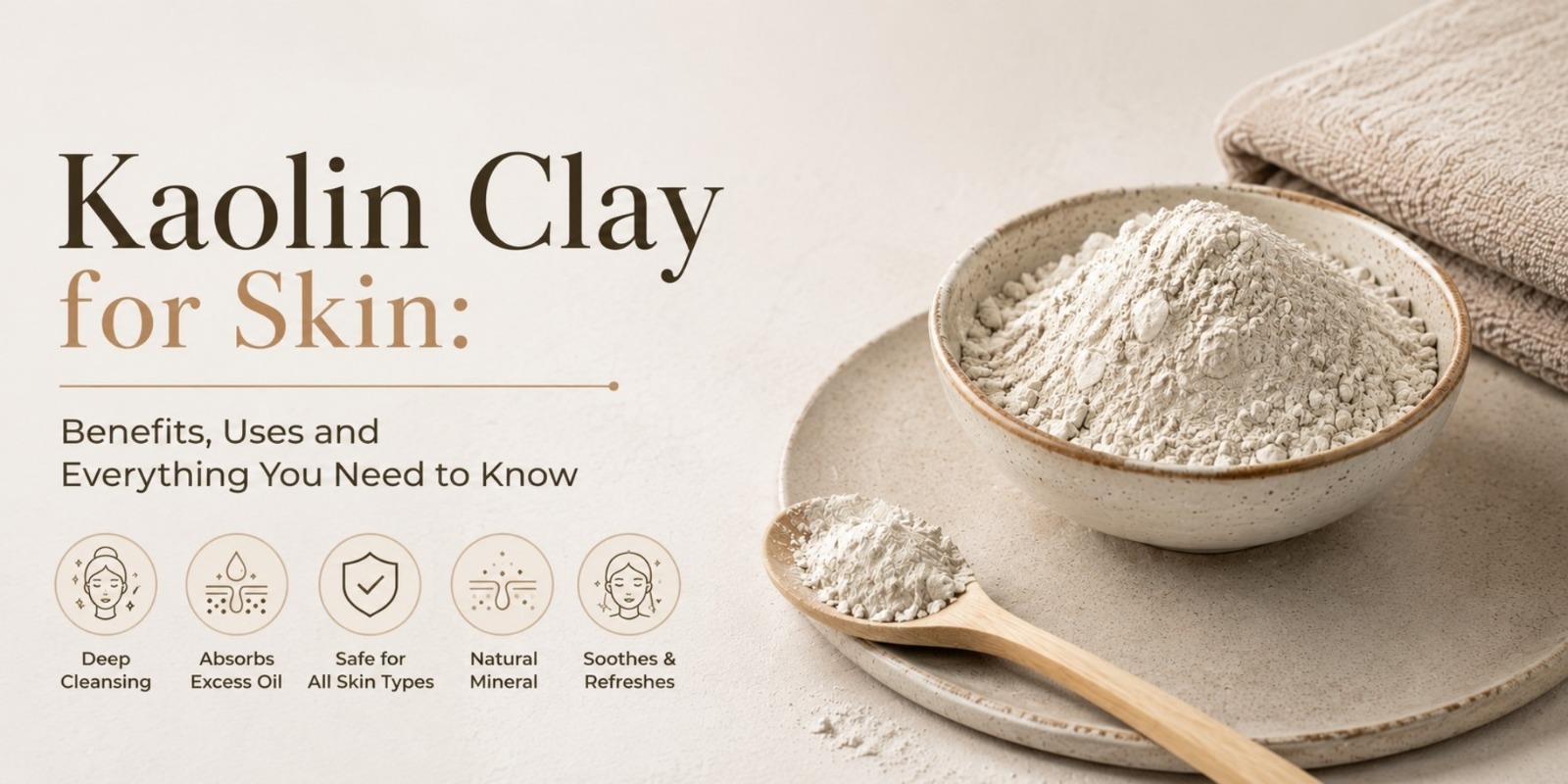
Kaolin Clay for Skin: Benefits, Uses and Everything You Need to Know
If you have ever picked up a face mask from a beauty store and checked the ingredient list, chances are you have already come across kaolin clay without even realising it. This soft, white clay has quietly become one of the most trusted ingredients in skincare, and for very good reason. It is gentle, it works on almost every skin type, and it does not come with a long list of side effects. Whether your skin is oily, dry, sensitive, or somewhere in between, kaolin clay for skin has something to offer.
In this blog, we are going to walk you through everything you need to know about this natural ingredient, from what it is and where it comes from, to how it actually benefits your skin and how you can start using it today.
Why is Kaolin Clay Good for Your Skin?
The reason kaolin clay for skin works so well comes down to its unique physical and chemical properties. Its tiny particles act like magnets, attracting and lifting away dirt, dead skin cells, excess oil, and environmental pollutants from the surface of your skin. At the same time, its pH level, which typically falls between 4.5 and 5.5, is very close to the natural pH of human skin. This means your skin can accept it without reacting negatively, which is why even people with highly reactive or sensitive skin tend to tolerate it well.
Top Benefits of Kaolin Clay for Skin
1. Deep Cleanses the Pores
One of the most well-known benefits of kaolin clay for skin is its ability to cleanse pores deeply. Throughout the day, your skin collects dust, pollution, sweat, and leftover product residue. All of this settles into your pores and, over time, can lead to blackheads, clogged pores, and breakouts. Kaolin clay works by binding to these impurities and pulling them out when you rinse the clay off. The result is skin that feels genuinely clean, not just surface-clean. Unlike strong chemical cleansers that can damage the skin barrier, kaolin does this job gently and effectively.
2. Controls Excess Oil Without Drying the Skin
People with oily skin often feel stuck choosing between products that leave their skin greasy and products that dry it out completely. Kaolin clay offers a middle ground. It absorbs the excess sebum sitting on the surface of your skin without going deeper and stripping away the natural oils your skin needs to stay healthy. This balanced approach to oil control makes kaolin clay for skin particularly popular among people who struggle with shine, especially in the T-zone area.
3. Gentle Exfoliation for Brighter Skin
Exfoliation does not always have to involve strong acids or gritty scrubs. Kaolin clay provides a mild form of physical exfoliation simply through its fine particle texture. When you apply and gently massage kaolin clay onto your skin, it buffs away dead skin cells from the surface without causing micro-tears or irritation. With regular use, this gentle exfoliation can leave your skin looking noticeably brighter, smoother, and more even in tone. Some research even suggests that consistent use of kaolin-based products can help reduce the appearance of fine lines over time.
4. Soothes Irritated and Sensitive Skin
If your skin is prone to redness, irritation, or inflammation, kaolin clay for skin can be a calming addition to your routine. The clay has natural anti-inflammatory properties that help reduce redness and soothe flare-ups. It is often recommended by skincare experts for people dealing with conditions like rosacea, eczema flare-ups, or general skin sensitivity. Because it does not contain any harsh chemicals and its pH is close to the skin's natural balance, it is less likely to trigger irritation compared to many other active skincare ingredients.
5. Helps with Acne and Breakouts
Acne often starts when excess oil and dead skin cells clog the pores, creating an environment where bacteria can thrive. Kaolin clay addresses two of those root causes directly. It absorbs excess oil from the skin surface and helps clear out the debris that builds up inside pores. Regular use can lead to fewer breakouts and less visible blackheads over time. It is not a cure for severe cystic acne, but for mild to moderate breakouts, incorporating kaolin clay for skin into your weekly routine can make a meaningful difference.
6. Detoxifies the Skin
We are all exposed to environmental pollution on a daily basis, and those particles can settle on your skin and break down the skin barrier over time. Kaolin clay is a natural detoxifying agent. Its porous structure allows it to attract and hold onto toxins, pollutants, and impurities, which are then removed when the clay is washed away. This detoxifying action leaves the skin looking refreshed and feeling lighter, making it a great weekly treatment for anyone living in a polluted urban environment.
7. Keeps Skin Hydrated
A common misconception is that all clay dries out the skin. With kaolin, this is simply not true. Because it only targets excess oil and does not disturb the skin's moisture barrier, the skin remains hydrated after use. The microspheres present in kaolin also have a capacity for water absorption, which actually helps maintain moisture levels in the outer layer of skin. This is one of the reasons kaolin clay for skin is safe to use even for people with dry or combination skin when used correctly.
How to Use Kaolin Clay in Your Skincare Routine
There are several ways to incorporate kaolin clay into your daily or weekly routine depending on what your skin needs.
As a Face Mask: Mix one tablespoon of kaolin clay powder with two tablespoons of rose water or plain water to form a smooth paste. Apply it to clean skin, avoiding the eye area, and leave it on for around 10 minutes. Rinse with warm water and follow with a toner and moisturiser. Use this once or twice a week.
As a Cleanser: Kaolin clay-based cleansers are available as pre-made products and work well as part of a daily cleansing routine. They do not foam the way traditional cleansers do, but they are very effective at removing surface impurities without stripping the skin.
As an Exfoliating Scrub: Mix kaolin clay with a small amount of finely ground oats and a few drops of honey to create a gentle scrub. Use it two to three times a week on damp skin for a smooth, glowing finish.
As a Spot Treatment: You can also apply a small amount of kaolin clay paste directly onto active breakouts as a spot treatment. Leave it on for 10 to 15 minutes and rinse off. This can help reduce swelling and draw out impurities from the affected area. Always follow up with a good moisturiser after using any clay treatment, regardless of your skin type.
Kaolin Clay vs Other Clays
If you have been exploring natural skincare, you have likely come across bentonite clay and multani mitti as well. Here is a quick comparison to help you understand where kaolin fits in.
Bentonite clay is more powerful and more drying than kaolin. It is better suited for very oily skin or as an occasional deep treatment rather than regular use. Multani mitti, also known as fuller's earth, is very popular in South Asian skincare and is highly absorbent, but like bentonite, it can leave skin feeling tight and dry if used too frequently. Kaolin clay sits at the gentler end of the spectrum. It is the best choice for daily or frequent use, especially for sensitive, dry, or combination skin types.
Who Can Use Kaolin Clay?
The short answer is almost everyone. Because of its mild nature and skin-compatible pH level, kaolin clay for skin is suitable for all skin types including oily, dry, combination, normal, and sensitive skin. It is also generally considered safe for use during pregnancy, though it is always a good idea to check with your doctor before introducing any new skincare ingredient during that time. If you are using it on skin that is currently broken, sunburned, or experiencing an active allergic reaction, it is best to wait until the skin has healed before applying any clay treatment.
Frequently Asked Questions
Kaolin clay is gentle enough for frequent use, but for most people, two to three times a week as a mask is sufficient. If you are using a kaolin-based cleanser, daily use is generally fine as long as you follow up with a moisturiser.
No. Unlike harsher clays such as bentonite, kaolin clay does not strip the skin of its natural oils. It only absorbs excess surface oil and leaves the skin's moisture barrier intact, making it safe even for dry skin types.
Around 10 to 15 minutes is ideal. Do not let the clay dry completely and crack on your skin, as this can temporarily reduce blood circulation to the skin surface. Rinse it off while it is still slightly damp.
Yes. Kaolin clay is actually one of the most recommended clays for sensitive skin because of its gentle texture and skin-friendly pH level. It soothes irritation rather than causing it, making it a great option for reactive skin types.
Kaolin clay can help manage mild to moderate acne by absorbing excess oil, clearing pores, and reducing surface bacteria. It is not a standalone treatment for severe acne, but as part of a consistent skincare routine, it can help reduce the frequency and severity of breakouts.
Get in touch with us!
×