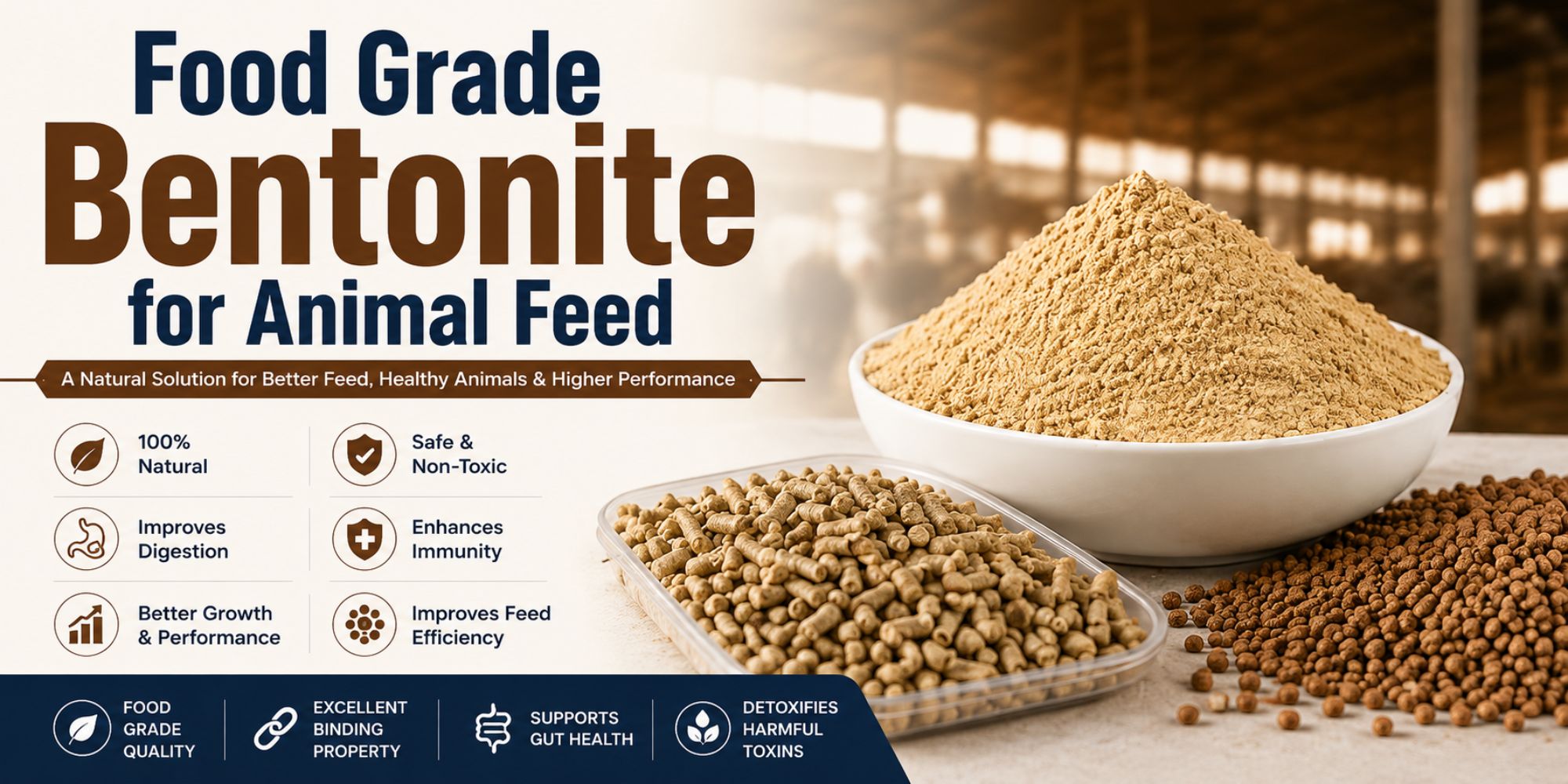
Food Grade Bentonite for Animal Feed: A Practical Guide for Farmers
Animal feed quality directly affects how healthy and productive livestock turn out to be. Poor storage, mold growth, and contaminated grains are common problems that farmers across the world deal with every season. This is exactly where Food Grade Bentonite for Animal Feed has earned its place as a trusted natural additive. It is a clay mineral that helps protect animals from harmful toxins while also improving how the feed itself behaves during storage and digestion.
This blog breaks down what bentonite actually is, how it works inside an animal's body, what dosage is considered safe, and how different animals respond to it. The aim is to keep things simple so that even a first time user can understand whether this mineral is worth adding to their feed program.
What Exactly Is Bentonite?
Bentonite is a clay that forms naturally from volcanic ash that has weathered over thousands of years. Its main mineral, montmorillonite, gives it a sheet like structure with a strong negative charge. This charge is the reason bentonite can absorb water, swell up, and attract positively charged particles like toxins and heavy metals.
There are two common forms used in feed:
TSodium bentonite swells more and binds toxins more strongly, which makes it useful where mold contamination is a bigger concern.
Calcium bentonite swells less but is gentler on the digestive system and is often preferred for regular feed mixing because of its mineral balance.
Bentonite for Animal Feed: The Core Problem It Solves
Grains stored in humid conditions are prone to mold growth, and mold produces toxic compounds called mycotoxins. Aflatoxins are the most studied and dangerous among them. When animals eat contaminated feed over time, the effects show up as slower growth, weaker immunity, reduced milk or egg output, and in serious cases, liver damage.
Bentonite for Animal Feed works because its clay particles physically bind to these toxin molecules in the gut before they get absorbed into the bloodstream. The bound toxin then simply passes out of the animal's system instead of causing harm. This is why regulatory bodies such as the European Food Safety Authority have reviewed and approved bentonite as a feed additive for toxin control across multiple animal species.
How Bentonite Behaves Inside the Animal's Body
Once mixed into feed, bentonite does three main things as it moves through the digestive tract. First, it absorbs excess moisture, which helps stabilize the feed before it even reaches the stomach. Second, its swelling action slows down how quickly feed ferments, which is particularly helpful for cattle on grain heavy diets where fast fermentation can lead to acidosis. Third, it acts as a buffer, helping maintain a more stable pH inside the gut so digestion stays smooth.
Uses of Bentonite in Animal Feed
The Uses of Bentonite in Animal Feed go beyond just toxin binding. Here is a simple breakdown of where it actually helps on a working farm.
| Use | What It Does |
|---|---|
| Mycotoxin Binding | Captures aflatoxins and other mold toxins before they can harm the animal. |
| Pellet Binding | Holds feed particles together, improving pellet strength during production. |
| Anti-Caking Agent | Prevents feed from clumping in humid conditions or molasses-rich feed formulations. |
| Moisture Control | Absorbs excess moisture, keeping feed dry, free-flowing, and easy to handle. |
| Digestive Buffering | Helps regulate fermentation and maintain a stable gut pH in ruminants. |
| Mineral Supply | Provides naturally occurring trace minerals that support overall animal health and nutrition. |
Bentonite Mineral for Animal Feed: Why Quality Matters
Not every clay sold in the market is fit for animals. Bentonite Mineral for Animal Feed must go through proper testing to confirm it is free of harmful levels of lead, arsenic, and mercury, since these can be just as dangerous as the toxins it is meant to remove. A genuine feed grade product is typically tested for purity, particle size, and swelling capacity before it reaches the market.
Farmers should always ask suppliers for lab test reports rather than assuming a product is safe simply because it is labeled as bentonite. Industrial grade clay used for construction or drilling is not the same thing, and using it in feed can do more harm than good.
How Much Bentonite Should Be Added to Feed
Dosage is one of the most common questions farmers have, and the answer depends on the type of animal and the purpose of using it. Below is a general guideline followed across the industry, though it is always wise to confirm exact figures with a feed nutritionist for your specific operation.
| Animal Type | Recommended Inclusion Rate |
|---|---|
| Poultry | 0.5% to 2% of total feed |
| Swine | 1% to 2% of total feed |
| Cattle and Sheep | 1% to 3% of the total mixed ration (TMR) |
| Fish and Shrimp | 0.5% to 1% of total feed, depending on the species |
Going beyond these levels is not advisable, since excess bentonite can interfere with the absorption of fat soluble vitamins and certain trace minerals like zinc and copper.
Species-Wise Benefits
Poultry: Better litter quality, improved pellet durability, and more consistent feed conversion are commonly reported benefits in broiler and layer operations.
Cattle and Dairy Animals: Reduced risk of acidosis, more stable rumen function, and in several dairy operations, improved milk yield have been observed when bentonite is included in grain-heavy diets.
Swine: Better gut health, particularly in piglets during the post-weaning stage when digestive upsets are common.
Aquaculture: Improved water clarity and reduced ammonia levels in ponds, along with a stronger immune response in fish and shrimp.
Combining Bentonite with Other Additives
Bentonite is often used alongside other feed additives for a broader effect. Probiotics help support gut flora, enzymes assist in breaking down complex feed ingredients, and yeast can further improve digestion. When combining additives, it is best to introduce them gradually and monitor animal performance before scaling up to the full herd or flock.
Things to Keep in Mind Before Using Bentonite
Bentonite is not a substitute for good farm hygiene. Proper grain storage, moisture control, and regular feed testing remain essential, and bentonite should be treated as an added layer of protection rather than the only solution. It is also worth noting that high inclusion levels can reduce the effectiveness of certain medications given to livestock, so timing and dosage should be planned carefully, especially during treatment periods.
Why Sourcing Matters
Working with a supplier that understands both the mineral properties of bentonite and the practical requirements of feed manufacturing makes a real difference in consistency. Variations in particle size or purity between batches can affect how well the product performs, so consistent sourcing is just as important as the mineral itself.
Final Thoughts
Bentonite has moved from being a niche additive to a widely accepted part of modern feed formulation. Its ability to bind toxins, stabilize feed structure, and support digestion makes it a practical addition for poultry farms, dairy operations, swine units, and aquaculture setups alike. The key to getting good results lies in using the correct dosage, sourcing a properly tested product, and treating it as part of a wider feed management strategy rather than a standalone fix.
Frequently Asked Questions
Its primary role is to bind harmful mycotoxins produced by mold in grains, preventing them from being absorbed into the animal's body, while also improving feed texture and pellet quality.
Yes, sodium bentonite swells more and binds toxins more strongly, while calcium bentonite is milder and often preferred for general feed mixing due to better digestive compatibility.
General guidelines suggest 0.5% to 2% for poultry, 1% to 2% for swine, and 1% to 3% for cattle and sheep, though exact figures should be confirmed with a nutritionist based on your specific feed program.
No, bentonite is a toxin binder and feed quality improver, not an antibiotic substitute. It can support overall gut health but should not be relied on for treating infections.
Always request lab test reports confirming low heavy metal content and proper mineral composition. Avoid industrial grade clay and only purchase from suppliers who specifically certify their product for feed or food-grade use.
Get in touch with us!
×