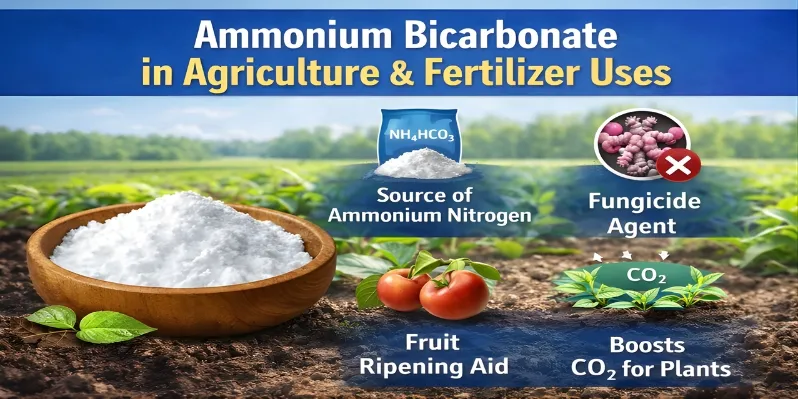
Ammonium Bicarbonate in Agriculture and Fertilizer Applications
Modern agriculture depends heavily on efficient and cost-effective nutrient sources to improve crop productivity and soil fertility. Among various nitrogenous compounds, ammonium bicarbonate in agriculture has played an important role, especially in regions where affordability and quick nitrogen availability are priorities. Although its applications have changed over time, ammonium bicarbonate remains relevant in certain fertilizer uses and agricultural practices.
What Is Ammonium Bicarbonate?
Ammonium bicarbonate is an inorganic compound with the chemical formula NH₄HCO₃. It is typically found as a white crystalline powder and easily breaks down when exposed to heat or moisture, releasing ammonia, carbon dioxide, and water. Due to its high nitrogen content and rapid solubility, it has been widely used as a nitrogen-based fertilizer.
In agricultural applications, ammonium bicarbonate mainly functions as a readily available source of nitrogen, a vital nutrient for healthy plant growth.
Role of Nitrogen in Agriculture
Nitrogen is one of the three primary macronutrients required for crops, along with phosphorus and potassium. It is crucial for:
- Leaf and stem growth
- Chlorophyll production
- Protein synthesis
- Higher crop yields
Fertilizers containing nitrogen help crops develop lush foliage and improve overall plant vigor. In agriculture, ammonium bicarbonate supplies nitrogen in ammonium form, which plants can take up directly or transform through soil processes.
Ammonium Bicarbonate in Agriculture: How It Works
When applied to the soil, ammonium bicarbonate dissolves quickly, releasing ammonium ions. These ions are either
- Absorbed directly by plant roots
- Converted by soil microorganisms into nitrate through nitrification
However, due to its unstable nature, ammonium bicarbonate can easily lose nitrogen as ammonia gas if not properly incorporated into the soil. This characteristic strongly influences how and where it is used.
Fertilizer Applications of Ammonium Bicarbonate
1. Nitrogen Fertilizer for Field Crops
Ammonium bicarbonate has been commonly used in the cultivation of crops such as
- Rice
- Wheat
- Maize
- Vegetables
Its high nitrogen content makes it effective for promoting early vegetative growth when applied correctly.
2. Basal Fertilizer Application
It is typically applied as a basal fertilizer, meaning it is used before or at the time of planting. Immediate soil incorporation reduces nitrogen losses and improves nutrient efficiency.
3. Paddy and Flooded Fields
In flooded rice fields, ammonium bicarbonate performs better because water reduces ammonia volatilization. This makes it suitable for wetland farming systems.
4. Fertilizer Blends
In some cases, ammonium bicarbonate is blended with other fertilizers to reduce cost and enhance nitrogen availability during early crop stages.
Benefits of Ammonium Bicarbonate in Agriculture
High Nitrogen Content
Ammonium bicarbonate contains a relatively high percentage of nitrogen, making it an effective nutrient source for nitrogen-deficient soils.
Quick Nutrient Availability
Its high solubility allows plants to access nitrogen quickly, which is especially beneficial during early growth stages.
Cost-Effective Fertilizer Option
Compared to many modern nitrogen fertilizers, ammonium bicarbonate is often more affordable, making it attractive for small and marginal farmers.
Simple Manufacturing Process
Despite its advantages, ammonium bicarbonate has several limitations as well.
High Nitrogen Loss
One of the major drawbacks of using ammonium bicarbonate in agriculture is nitrogen loss due to ammonia volatilization, particularly in dry or alkaline soils.
Storage and Handling Issues
The compound breaks down readily when exposed to heat and moisture, which makes storage and transportation difficult.
Lower Efficiency Compared to Modern Fertilizers
Compared to urea or controlled-release fertilizers, ammonium bicarbonate typically has lower nitrogen-use efficiency.
Environmental Concerns
Improper use can lead to ammonia emissions, contributing to air pollution and nutrient imbalance in soil.
Best Practices for Agricultural Use
To maximize benefits and minimize losses, farmers should follow these practices:
- Incorporate fertilizer into the soil immediately after application
- Avoid surface application in dry conditions
- Use in flooded or moist soils where possible
- Apply during cooler parts of the day
- Combine with organic matter to improve nitrogen retention
Following these guidelines improves fertilizer efficiency and crop response.
Comparison with Other Nitrogen Fertilizers
When compared to urea or ammonium sulfate:
- Ammonium bicarbonate acts faster but is less stable.
- Urea provides higher nitrogen efficiency along with improved storage stability.
- Ammonium sulfate provides sulfur along with nitrogen.
While modern fertilizers dominate today’s markets, ammonium bicarbonate still has niche relevance due to its low cost and fast action.
Future Outlook of Ammonium Bicarbonate in Agriculture
As sustainable agriculture gains importance, the use of ammonium bicarbonate has decreased in favor of more efficient fertilizers. However, it is still used in certain regions where lower cost and specific soil conditions make it a suitable option. Ongoing research into improved application techniques and fertilizer blends may help extend its agricultural relevance in the future.
Conclusion
Ammonium bicarbonate in agriculture has played a significant role as a nitrogen fertilizer, particularly in traditional farming systems. While it has limitations related to nitrogen loss and handling, its affordability and quick nutrient availability make it useful under the right conditions. When applied carefully and incorporated properly into the soil, ammonium bicarbonate can support healthy crop growth and improved yields. Understanding its properties, benefits, and challenges allows farmers to make informed decisions and use this fertilizer responsibly and effectively.
×